


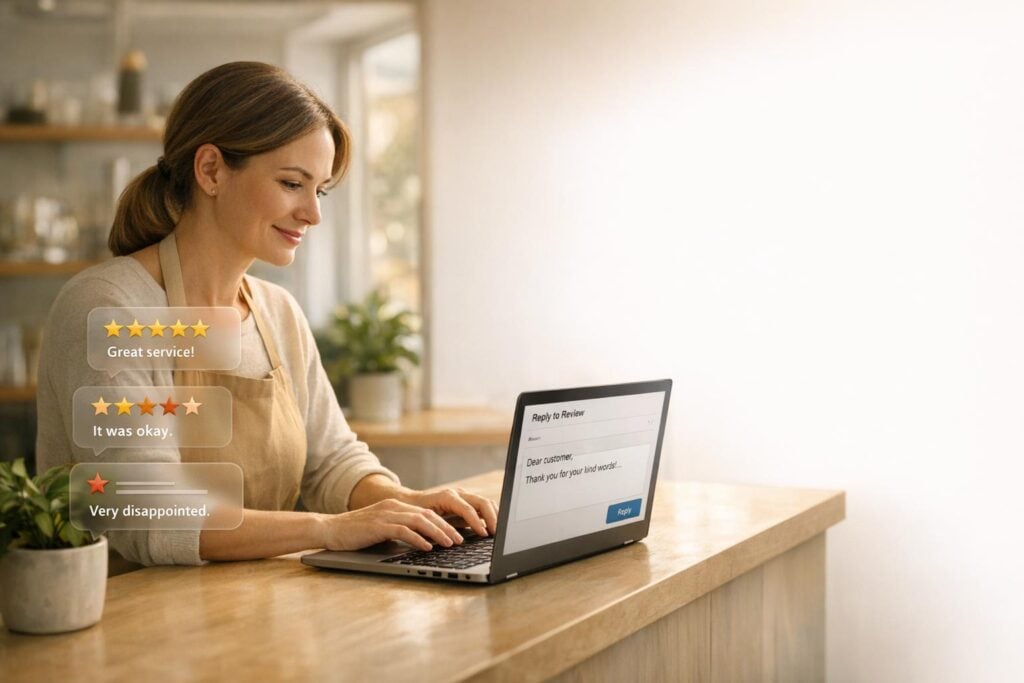
Every customer review is a chance to build trust and attract new customers. Did you know that 93% of consumers read reviews before buying, and 89% pay attention to how businesses respond? Engaging with reviews can boost revenue by 58% and even improve your local SEO rankings. Plus, responding within 24 hours can lead to 60% higher customer satisfaction.
This guide includes 20 ready-to-use response templates for different review scenarios, from 5-star praise to addressing complaints. Whether you’re thanking loyal customers or handling negative feedback, these templates save time and help you respond professionally. Here’s what you’ll learn:
- Why responding to reviews matters for trust, revenue, and visibility.
- Templates for positive, neutral, and negative reviews.
- Tips to personalize replies and resolve issues effectively.
Key takeaway: Responding to reviews – quickly and thoughtfully – can strengthen trust, improve your reputation, and grow your business.

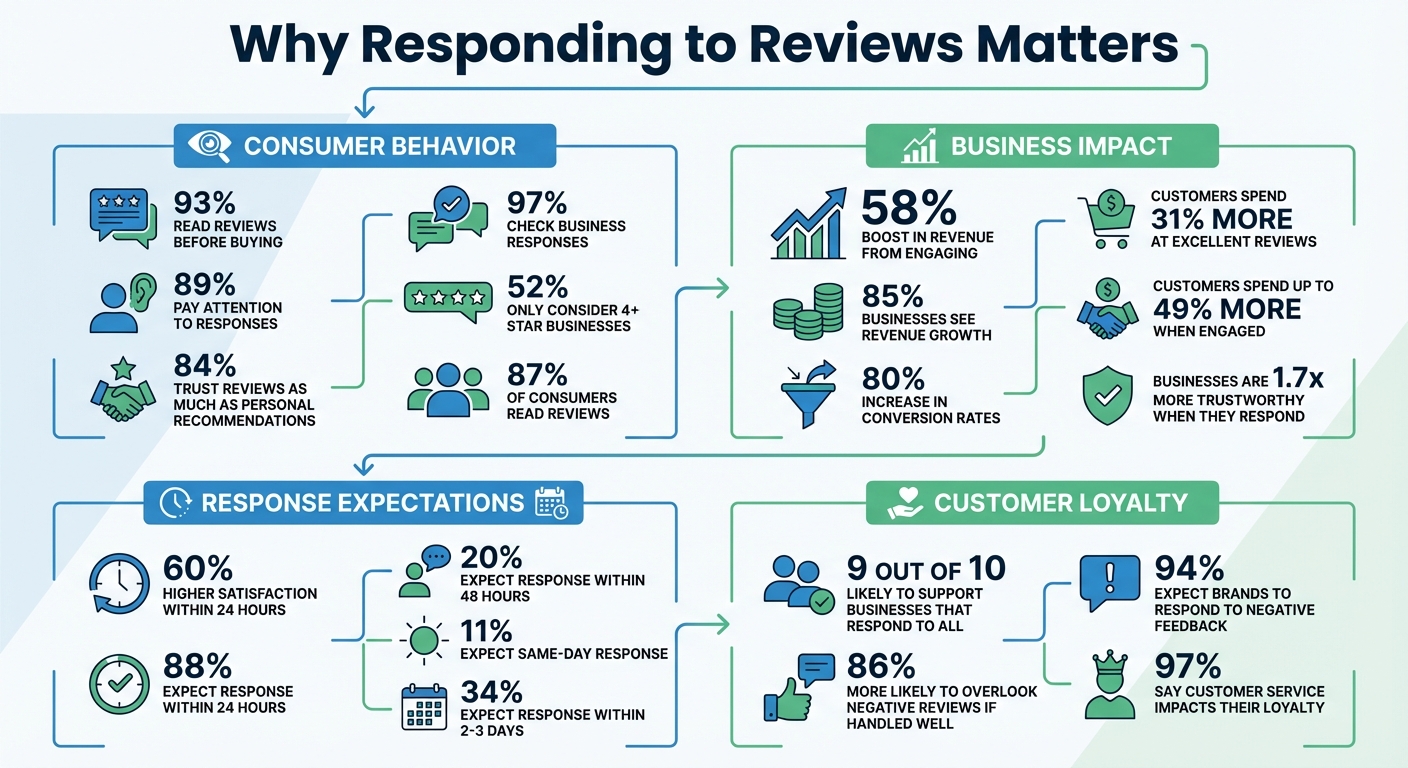
Customer Review Response Statistics: Impact on Business Growth and Revenue
1. Simple 5-Star Review Response
Even a review with just five stars and no text deserves a thoughtful reply. Why? Because 97% of people who read reviews also check how businesses respond. When someone gives you five stars, it’s a clear sign they had a great experience. Acknowledge it publicly to keep the positivity flowing.
Keep your response short, warm, and personal. If the reviewer’s name is visible, use it, thank them sincerely, and invite them back. For example:
"Hi Sarah, thank you so much for the five stars! We’re thrilled you had a great experience with us and look forward to welcoming you again soon!"
Timeliness is key. Aim to respond within 24–48 hours to show that customer feedback is a priority. Plus, quick responses can help improve your local search rankings.
For star-only reviews, a simple reply like "Thanks for the five stars! We appreciate your support and hope to see you again" works perfectly. These small but meaningful interactions build your reputation as a business that values its customers, which has been linked to increased revenue.
One thing to avoid: turning your response into a sales pitch. Comments like "Check out our new promotion!" or "Sign up for our newsletter!" can feel insincere and shift the focus away from the customer’s experience. Instead, focus on genuine appreciation and let your brand’s personality shine through naturally. This sets the stage for handling all types of reviews with the same authenticity and care.
sbb-itb-5b82b38
2. Detailed Positive Review Response
When a customer writes a thoughtful, detailed review, they’re giving you more than just feedback – they’re sharing a moment of connection with your business. Whether they’re raving about your espresso machine, praising a team member, or explaining how your service made their day easier, these reviews deserve an equally thoughtful reply. A detailed response shows you’ve read their words carefully and genuinely value their input.
Start by thanking the customer by name and referencing the specific highlights they mentioned. Did they love "the rooftop view" or "the onboarding flow"? Mention it! If they praised an employee like Sarah or Mike, be sure to acknowledge them directly and let the reviewer know their kind words will be shared with your team. This small gesture can go a long way in making the customer feel heard.
It’s also a good idea to naturally include relevant keywords in your reply. For instance, saying, "We’re thrilled you enjoyed our organic coffee", not only feels personal but also boosts your local SEO efforts.
Match the tone of the review. If the customer’s feedback is brimming with enthusiasm (complete with emojis or playful language), let your response reflect that same energy. Feedback gives you a unique glimpse into the customer’s experience, and your reply should mirror their excitement and appreciation.
Wrap up your response with a friendly call to action. Invite them to return, mention an upcoming event, or share something new they might enjoy. Thoughtful replies like these don’t just show gratitude – they can also drive business growth. For example, Social Ordeals turned client feedback into a remarkable $4.7 million in revenue in January 2024 by leveraging customer reviews effectively.
3. First-Time Customer Response
When a first-time customer leaves a review, it’s more than just feedback – it’s your chance to make a lasting impression. Think of it as the starting point for a relationship that could turn them into a loyal customer. Your response should make them feel welcomed and valued right from the start.
Start by explicitly acknowledging their first visit. Phrases like "Welcome to the [Business Name] family!" can go a long way in creating a sense of belonging. Personalize your reply by referencing specific details from their review. For example, if they mention loving your "caramel latte" or being helped by "Jessica at the front desk", call those out. This shows you’re genuinely paying attention, not just copying and pasting a generic reply.
Timing matters too. Aim to respond within 24 hours to keep the positive vibes going and show that you’re engaged. A quick, thoughtful reply reinforces their good impression and signals that you care about their experience.
Finally, wrap up your response with an invitation to return. Avoid generic phrases like "Hope to see you again." Instead, try something more engaging, such as "Let us know if you’d like recommendations for your next visit – we’re here to help!" This not only encourages a second visit but also positions you as approachable and attentive. Remember, 84% of people trust online reviews as much as personal recommendations, so your thoughtful response isn’t just for the reviewer – it’s also influencing everyone else reading along.
4. Loyal Customer Response
Repeat customers are the heart of your business, and every interaction with them should reflect that. When a loyal customer leaves a review, they’re not just offering feedback – they’re reaffirming their bond with your brand. Your response should celebrate that loyalty and make them feel like the VIPs they are.
Start by acknowledging their commitment. Skip generic phrases like "Dear valued customer" and instead use language that highlights your connection, such as, "It’s always a pleasure to have you with us", or "Thank you for being such an important part of our community." If they mention specific staff members or experiences, call them out by name. For example, "Sarah will be thrilled to hear your kind words!" This personal touch shows you’re paying attention to the details that matter.
Take it a step further by personalizing your response with specifics from their past interactions. Mention their favorite product, service, or even a memorable visit. For instance, if they rave about a particular dish or stylist, let them know you remember: "We’re so glad you enjoyed your favorite sandwich again!" This level of attention solidifies their emotional connection with your brand. In fact, businesses that actively use customer feedback to refine their services see a 15% boost in retention rates, and thoughtful, personalized replies play a big role in that success.
Finally, invite them back in a way that feels warm and genuine. Instead of a generic "Hope to see you soon", try something more engaging, like, "We can’t wait to see you at your next appointment!" or "Let us know if you’d like to try something new next time – we’d love to surprise you." Loyal customers are already your biggest advocates, so you can also encourage them to share their experiences with others. A heartfelt, tailored send-off not only strengthens their loyalty but also reinforces your reputation as a business that truly cares.
5. Product Quality Compliment Response
Positive product reviews are more than just kind words – they’re a chance to showcase what makes your product shine. With 93% of consumers checking online reviews before making a purchase, your response can make a lasting impression.
Be specific and personal. Instead of a generic reply like, "Thanks for your feedback", mention the product name and add a thoughtful touch. For example: "We’re so glad you’re enjoying the handcrafted leather wallet! It’s made with sustainably sourced materials, and we’re proud of its unique design." This not only makes the reviewer feel valued but also gives potential customers more reasons to trust your brand.
Take it a step further by sharing their feedback with your team: "I’ll make sure to pass your kind words along to our design team – they’ll be thrilled to hear it!" Acknowledging the people behind the scenes adds a human element, reinforcing that your business values quality and customer satisfaction. In fact, businesses that respond to reviews are seen as 1.7 times more trustworthy.
Wrap up your response with a friendly suggestion, but avoid being overly salesy. For instance, if someone raves about your organic coffee beans, you could say, "If you loved the medium roast, you might want to try our new dark roast blend – it’s been a big hit this month!" Framing it as a recommendation rather than a pitch makes it feel natural and helpful. Subtle suggestions like these can encourage further purchases, especially since customers who see businesses engaging with reviews tend to spend up to 49% more.
Timing matters, too. Aim to reply within 48 hours, as over 20% of customers expect a prompt response. A quick, thoughtful reply shows you’re active and truly care about your community. This blend of timeliness and personalization can turn a simple compliment into an opportunity to strengthen trust and encourage future sales.
6. Fast Service Compliment Response
When a customer appreciates your quick service, they’re spotlighting one of the most critical aspects of doing business today. A fast response to their review reflects that same efficiency they value. This not only strengthens the trust you’ve built but also reinforces your commitment to excellent service. Much like our approach to positive reviews, the key here is to combine speed with a personal touch to deepen customer loyalty.
Start by addressing the customer by name and referencing their specific compliment. Instead of a generic "Thank you for your feedback", go for something like: "Hi Sarah, we’re so happy we could prepare your order in under 10 minutes! Our team takes pride in providing swift service, even during our busiest times." This kind of response validates their experience and reminds other readers of your dedication to efficiency – something 97% of consumers consider when reading reviews and responses.
Be sure to recognize your team’s efforts as well. Let the customer know their praise will be shared with the staff or department involved. For instance: "I’ll make sure to share your kind words with our kitchen team – they’ll be thrilled to know they made your day a little easier!" This not only boosts employee morale but also shows potential customers that your team genuinely cares about delivering quality service quickly.
End your response by inviting them back and offering a practical tip to enhance their next visit. For example, if the review mentions a fast oil change, you could say: "Next time you’re short on time, give our mobile check-in feature a try – it’ll help you save even more time!" This adds value without being overly promotional and encourages repeat visits. After all, customers tend to spend 31% more at businesses with excellent reviews. Plus, responding to reviews can boost conversion rates by 80% compared to businesses that don’t engage. Companies that actively manage their online reputation even see 58% more revenue.
As LocalZen puts it:
"Speed is everything when it comes to reviewing responses. The faster you reply, the more your business stands out as responsive and customer-focused." – LocalZen
7. Customer Service Compliment Response
When a customer takes the time to praise your team’s service, it’s the perfect chance to highlight your business’s personal touch. Keep your response warm and specific – never robotic. If the customer mentions an employee by name, make sure to include that name in your reply and mention that you’ll share the feedback with them. This shows you’ve genuinely read their review and value both their words and your team.
Skip generic greetings and address the customer directly. For example: "Hi Jennifer, your kind words made our day! I’ll be sure to share your compliment with Marcus – he’ll be thrilled to hear his efforts made a difference." A thoughtful reply like this not only acknowledges their experience but also makes it clear that their feedback has a real impact. As Ken McMahon, Customer Success Lead at Nextiva, explains:
"A sincere response shows that your business appreciates its customers, cares about their opinions, and wants to continue meeting and exceeding expectations".
This approach not only validates the customer’s experience but also opens the door for them to return.
Here’s why it matters: 9 out of 10 consumers are more likely to support a business that actively responds to reviews. Additionally, 85% of businesses that engage with feedback see revenue growth. Even more striking, businesses that reply to reviews can see an 80% increase in conversion rates compared to those that don’t. Timing is key, too – over 20% of customers expect a response within 48 hours. Acting quickly ensures your reply feels relevant and keeps the positive momentum alive.
End your response with a friendly invitation to return. For instance: "We can’t wait to see you again and make your next visit just as special!" This leaves the door open for future interactions, building loyalty while also giving your local SEO a boost.
8. General Positive Review Response
When responding to short, positive reviews like "Great experience!" or "Loved it!", it’s important to keep your reply thoughtful and personal, even if the feedback is brief. These comments might not dive into specifics, but they still deserve recognition and a warm acknowledgment.
Start by addressing the reviewer by name and expressing your gratitude. For example: "Hi Sarah, thank you so much for your kind words! We’re thrilled to hear you had a great experience with us." This small touch not only shows appreciation but also resonates with potential customers reading the reviews. After all, 9 in 10 consumers are more likely to support a business that takes the time to respond to all reviews.
Timing matters, too. Aim to reply within 24–48 hours to show you value their feedback and to keep the interaction fresh. Quick responses are crucial, as over 20% of customers expect businesses to reply within that window. A timely reply can also help maintain the positive momentum while the experience is still top of mind.
End your response with an inviting call to action. A simple line like "We can’t wait to welcome you back soon!" or "Looking forward to seeing you again!" keeps the connection alive and encourages repeat visits. This approach can have a big impact – 85% of businesses that actively engage with customer feedback report revenue growth. Plus, businesses that interact with reviews often see an 80% boost in conversion rates compared to those that don’t.
Keep your tone friendly and conversational. Avoid overly formal phrases like "We appreciate your patronage." Instead, use natural language that reflects your brand’s personality. Thoughtful, timely responses not only strengthen customer relationships but also improve your local SEO, helping your business stand out even more.
9. Specific Complaint Response
When a customer shares a detailed complaint – whether it’s about a delayed delivery, a defective product, or poor service – it’s essential to respond with the same level of detail. A generic apology won’t cut it. Instead, address the specific issue they’ve mentioned and show genuine effort to resolve it. Here’s how you can handle such complaints effectively.
Start by addressing the customer by name and acknowledging their exact concern: "Hi Michael, I’m truly sorry for the delay with your February 18th order." This small step demonstrates that you’ve taken the time to understand their issue, rather than relying on a canned response. In fact, 68% of consumers expect brands to deliver personalized experiences in every interaction.
Next, take full responsibility without offering excuses. For example, if a customer complains about receiving cold food at your restaurant, you could say: "You’re absolutely right – your meal should have been served hot." Then, provide a clear and actionable solution, such as offering a refund, replacement, or discount. Avoid vague statements like "We’ll do better next time," as they do little to rebuild trust.
For more complex or sensitive issues, it’s a good idea to move the conversation offline. Share direct contact information: "Please contact me directly at manager@yourbusiness.com or (555) 123-4567 so we can resolve this quickly." This approach not only keeps the details private but also shows others that you’re serious about resolving customer concerns.
Finally, after resolving the issue offline, follow up with the customer to ensure they’re satisfied. Encourage them to update their review to reflect the resolution. This not only helps repair the relationship but also demonstrates to future customers that your business is committed to excellent service and accountability.
10. Non-Customer Review Response
Sometimes, reviews come from people who haven’t actually interacted with your business. These could be cases of mistaken identity, competitor tactics, or simple errors. Before responding publicly, it’s important to check your CRM or transaction records to confirm whether the reviewer is a legitimate customer. This step ensures your response is accurate and professional, addressing not just the reviewer but also potential customers who may be watching.
If you’re confident the reviewer isn’t a customer, stick to clear and professional language without making accusations. For instance, you could say something like: "We take all feedback seriously, but we couldn’t find a record of a customer with your name or a transaction matching your description in our system." This approach keeps your tone neutral and avoids sounding defensive. It’s worth noting that 97% of people who read reviews also pay attention to how businesses respond, so your reply is as much for them as it is for the reviewer.
To keep the conversation productive, invite the reviewer to contact you directly: "Please reach out to us at info@yourbusiness.com so we can look into this further." This shows your willingness to resolve issues and can often discourage false claims.
If the review is clearly spam, fake, or violates platform guidelines, take action by flagging it for removal. On platforms like Google Business Profile, use the three-dot menu to report the review as "Spam/Fake Content" or "Conflict of Interest" when applicable. Google has streamlined its process, with review removal decisions now taking less than five days on average as of 2026.
The best way to combat fake reviews in the long run is by consistently gathering authentic positive feedback. Engaging with reviews – even the questionable ones – helps strengthen your reputation and drives conversion growth over time.
11. Service Problem Response
When a customer shares a service complaint, your response becomes a public reflection of your business’s values. Aim to reply within 24 to 48 hours to show your dedication to addressing concerns – 11% of customers expect a reply the same day, and 34% look for one within two to three days.
Start by addressing the reviewer by name and referencing specific details from their feedback. Instead of a generic apology like "We’re sorry for your experience", say something more personal, such as: "Hi Sarah, I’m truly sorry that your Tuesday visit fell short of our standards. A long wait is unacceptable, and we take this seriously." Personalizing responses not only shows care but can also boost revenue by up to 40%.
Next, take full ownership of the situation. Use "I" statements to show accountability. Follow the "3 R’s" approach: Read the review with empathy, Reflect on what went wrong, and Respond professionally. For example, after reading and reflecting, you might say: "I’ve reviewed your feedback and already spoken with our scheduling team to ensure this doesn’t happen again." This step reassures customers that their concerns are being addressed thoughtfully.
Provide a concrete solution, whether it’s a redo, refund, or discount. Then, encourage the customer to continue the conversation privately: "Please contact me directly at manager@yourbusiness.com so I can resolve this for you." This approach not only resolves the issue behind the scenes but also shows others that you’re committed to making things right. Keep in mind, 94% of customers expect a response to negative reviews.
12. Product Quality Complaint Response
When it comes to handling product quality complaints, a thoughtful and personal approach is essential. These complaints strike at the heart of your business, so a quick and empathetic response is key. In fact, 94% of consumers expect brands to address negative feedback promptly. Start by addressing the customer by name and referencing the specific product: "Hi Michael, I’m sorry to hear the leather wallet you received didn’t meet your expectations." This shows you’ve taken the time to read and understand their concern.
Own the issue without being defensive. Use "I" statements to convey accountability, such as: "I’ve shared this with our quality control team to investigate what went wrong." This not only reassures the customer but also signals to others that you’re serious about maintaining quality standards. Keep your tone professional, even if the complaint stems from a misunderstanding.
Provide a clear solution. Whether it’s offering a refund, replacement, or discount, be upfront about how you’ll resolve the issue. Then, move the conversation offline to handle the details privately: "Please email me directly at support@yourbusiness.com with your order number so I can process your replacement today." This protects sensitive information while reinforcing your commitment to resolving the problem quickly.
A great example of turning a negative into a positive comes from September 2025, when Geraldine Hernandez, co-founder of Savory Crust Gourmet Empanadas, responded to a one-star Yelp review. She not only investigated the complaint but also donated a portion of profits to a related charity, transforming the situation into a moment of community goodwill.
This strategy of taking responsibility and offering solutions will also be crucial when addressing concerns about your team, which we’ll cover next.
13. Staff Complaint Response
Staff complaints can ripple through your team and even impact how the public views your business. The stakes are high – just one negative review can drive away 20% of potential clients, and if a business racks up four or more negative reviews, it could lose the trust of 70% of customers. Handling these situations requires a careful approach that balances accountability with maintaining your team’s morale. Here’s how you can respond effectively.
Start by addressing the reviewer by name and offering a genuine apology. For example: "Dear Sarah, I sincerely apologize for the unprofessional experience you had during your visit." Avoid being defensive or making excuses. Instead, acknowledge the shortfall clearly and without placing blame on the employee.
Explain the steps you’re taking to address the issue: "I’ve shared your feedback with our team for retraining purposes to ensure this doesn’t happen again." Use "I" statements to show personal responsibility. A polite, solution-driven tone highlights your professionalism and accountability.
Then, provide a clear resolution. For instance, mention that the feedback has been shared internally and offer a practical remedy, like a complimentary session with a senior staff member. This not only shows your dedication to quality but also gives the customer a chance to see your business in a better light.
Finally, move the conversation offline for privacy and efficiency: "Please reach out to me at manager@yourbusiness.com to ensure your next experience meets our standards." By taking the discussion offline, you protect sensitive details while demonstrating your commitment to resolving the issue and improving your service.
14. Pricing Complaint Response
When customers bring up pricing concerns, they’re questioning the value they perceive in your services. But here’s a key insight: 86% of customers are willing to pay more for exceptional service. This means how you address their concerns can make all the difference.
Start by acknowledging their feedback and showing appreciation for their honesty. For example:
"Hi Jennifer, thank you for taking the time to share your thoughts. I completely understand that pricing plays a big role when deciding on a service provider."
Leon Chaddock, CEO of Sentiment.io, underscores the importance of empathy in these situations:
"Addressing customer complaints about price requires a thoughtful and empathetic approach. By actively listening to your customers, offering sincere apologies, and outlining clear action steps to resolve the issue, you can turn a dissatisfied customer into a loyal advocate for your brand."
Once you’ve established empathy, take the opportunity to explain the reasoning behind your pricing. Highlight the value your customers receive rather than defending the cost. For instance:
"Our pricing reflects our dedication to delivering top-tier quality and the expertise of our team, ensuring you get the best possible results."
Next, offer a practical solution. Suggest alternative options, highlight upcoming discounts, or provide a tailored recommendation. For example:
"We do offer a mid-tier package that might align better with your budget while still delivering outstanding results."
Finally, invite them to continue the conversation privately. This shows you’re invested in finding a resolution:
"Feel free to reach out to me directly at owner@yourbusiness.com so we can explore the best options for you."
15. Private Discussion Request Response
When dealing with complex or sensitive concerns – like billing disputes or technical glitches – it’s best to take the conversation offline. This approach not only protects the customer’s privacy but also allows you to dive into the details and find a resolution more effectively.
Start by acknowledging the issue publicly and providing clear contact information. For instance:
"Hi Michael, thank you for bringing this to our attention. Please feel free to contact us directly at sarah@yourbusiness.com or (555) 123-4567 so we can sort out the details of your order."
This approach shows the reviewer – and anyone else reading – that you’re serious about addressing feedback. Tim Clarke, Senior Reputation Manager at Thrive Internet Marketing Agency, emphasizes:
"Negative is much harder. You must remain polite, professional, and escalate issues offline."
Let the reviewer know that shifting the discussion offline ensures their privacy and allows you to securely address their concerns. This method not only resolves issues faster but also strengthens your brand’s online reputation.
For example, one customer had a pricing issue resolved privately, leading them to update their review to 5 stars – a clear sign of regained trust.
16. General Negative Review Response
When a negative review doesn’t fall into a specific category, it’s crucial to handle it thoughtfully. These types of responses offer an opportunity to show potential customers how you manage criticism. According to research, 94% of consumers expect brands to respond to negative feedback. Addressing these reviews publicly can help build trust with anyone reading.
Start by addressing the reviewer by name and thanking them for their feedback. A personalized response shows you’re not relying on a generic template. Then, offer a sincere apology and briefly explain the steps you’re taking to address the issue. For instance: "Hi Jennifer, thank you for sharing your experience. I’m truly sorry for the inconvenience you encountered during your visit. I’ve already discussed this with my team to ensure improvements moving forward."
Timeliness matters. Responding within 24 hours shows you take feedback seriously. Keep in mind that your response isn’t just for the reviewer – it’s for everyone who might read it. With 87% of consumers reading reviews and 52% only considering businesses with at least a 4-star rating, your professionalism can make a big difference. In fact, 86% of people are more likely to overlook a negative review if they see it was handled well.
Finally, invite the reviewer to continue the conversation privately. For example: "Please feel free to contact me directly at [your contact info] so we can resolve this further." This approach not only shows accountability but also protects both parties’ privacy. A well-crafted response like this builds trust and sets a positive tone for future interactions.
17. 4-Star Review with Minor Issues Response
A 4-star review often reflects a positive experience but includes feedback on something that could be improved. These reviews typically come from loyal customers who value your business but encountered a small issue during their visit. Responding thoughtfully means addressing both the praise and the concern, rather than giving a generic "thank you."
Start by personalizing your response. Use the customer’s name and refer to the specific details they mentioned. For example:
"Hi Marcus, thank you for the 4-star review! I’m so glad you enjoyed our breakfast burrito and appreciated our friendly staff. I’m truly sorry, though, that your coffee wasn’t as hot as it should have been – this doesn’t meet our usual standards."
This kind of acknowledgment shows you’re paying attention.
Next, outline the steps you’re taking to address their concern. Being specific reassures the customer that their feedback matters. For instance:
"I’ve already spoken with our barista team about ensuring proper temperature checks, and we’re introducing a new quality control process to make sure every cup meets expectations."
When customers see their comments lead to action, it builds trust.
Research indicates that 85% of businesses that respond to customer feedback experience revenue growth. Always invite the reviewer to return. For example:
"I’d love the chance to earn that fifth star on your next visit. Feel free to contact me directly at [your phone number] if there’s anything more I can do."
This personal follow-up matters – 97% of consumers say customer service impacts their loyalty, and 88% expect a response within 24 hours.
18. Neutral Review Response
Neutral reviews, often marked by a 3-star rating, suggest an average experience. Customers leaving these reviews usually don’t feel strongly enough to praise or criticize heavily. They might include a mix of compliments and complaints or be brief and vague, reflecting a lack of strong impressions. While these reviews might not seem as pressing as a 1-star rating, they offer a valuable chance to show that you care about every customer’s experience – not just the extremes. Here’s how you can handle these reviews effectively.
Start by acknowledging the review and highlighting any positives they mentioned. For example:
"Hi Sarah, thank you for the 3-star review! We’re glad you enjoyed our pastries and found our location convenient."
Then, address any concerns with honesty and a clear plan for improvement:
"I’m sorry to hear our service felt rushed. We were short-staffed that morning but have since adjusted our scheduling to prevent this in the future."
Finally, invite further feedback to demonstrate your willingness to improve:
"Please let us know how we could have made your experience a 5-star one. Feel free to reach out to me directly at (555) 123-4567."
Why does responding to neutral reviews matter? Research shows that businesses replying to all reviews are twice as likely to attract customers compared to those that don’t. Moreover, 20% of consumers expect a response within 24 to 48 hours.
"Neutral reviews often are both a bit of compliment and complaint, and your response should fit both." – BAA-Solutions
These reviews also play a role in shaping a trustworthy business profile. A 4.6-star average often appears more credible to potential customers than a perfect 5.0 rating. Plus, 85% of businesses that engage with customer feedback see revenue growth. Think of your response as a public statement for future customers – showing care for a 3-star experience speaks volumes about your commitment to quality.
19. Mixed Review Response
Mixed reviews, like 3- or 4-star ratings, combine positive feedback with areas of concern. These reviews deserve special attention because they often come from customers who appreciate your brand but faced a specific issue that held them back from giving a perfect score. Interestingly, 9 out of 10 consumers are more likely to support businesses that respond to all reviews – whether glowing or critical.
A great way to handle these reviews is by using the "sandwich" method. Start by acknowledging the positive aspects of their experience. For example:
"Hi Marcus, thank you for the 4-star review! We’re so glad you enjoyed our breakfast burrito and found our staff friendly."
Then, address the criticism with empathy and provide a solution:
"I’m sorry to hear about the longer wait time. To improve, we’ve added two team members during peak hours to speed up service. As a gesture of goodwill, we’d love to offer you a 15% discount on your next visit – please call us at (555) 123-4567."
Finally, close by inviting them back or asking for further input:
"We hope to see you again soon, and let us know if there’s anything else we can do to improve!"
Keep your response concise, aiming for 100–150 words to ensure clarity and impact. It’s worth noting that 97% of consumers who read reviews also look at how businesses respond. Thoughtful replies like this not only address concerns but also demonstrate accountability, which builds trust with future customers.
20. Average Review Response
When it comes to 3-star reviews, they often reflect a mix of praise and constructive feedback. These reviews can be incredibly helpful because they highlight areas where you’re doing well while pointing out opportunities for improvement. Typically, they come from customers who care enough to share honest opinions, even if something stopped them from giving a perfect score.
This template is designed to help you approach 3-star reviews with a positive and proactive mindset, ensuring you extract useful insights while maintaining a professional tone.
Why does this matter? Studies show that 91% of consumers say reviews shape their perception of a brand, and 86% prefer brands that respond to all reviews – even neutral ones. Engaging with these reviews not only improves your image but also shows that you’re committed to growth.
Start by thanking the customer for their feedback and asking what could have turned their experience into a 5-star one. This simple act demonstrates that you’re actively listening and eager to improve.
"By seeking constructive criticism, you show that you genuinely value customer experience and are open to suggestions." – Anne Autio, Uberall
Here’s an example response you can use:
"Thanks for your feedback, [Name]! We appreciate you taking the time to share your thoughts. Please let us know what we can do to earn a 5-star rating next time. Your input helps us improve!"
When responding, keep your tone polite, professional, and optimistic. Focus on solutions rather than excuses. If the review highlights specific concerns, take the conversation offline to address them in detail and provide a resolution.
How to Write Better Review Responses
Writing thoughtful review responses takes a bit of effort, but it can make a huge difference. Start by personalizing your reply – address the reviewer by name and mention specific details from their feedback. For example, if they raved about a particular dish or praised a staff member, referencing these details shows you’re paying attention and genuinely care about their experience.
Keep the tone personal and authentic. Using "I" instead of "we" can make your response feel more genuine. For instance, saying, "I’m sorry you had this experience" feels more heartfelt than the more formal "We apologize for the inconvenience".
Timing is also crucial. Aim to respond within 24 to 48 hours, as 53% of customers expect a reply within a few days. Quick responses build trust, and for negative reviews, it’s wise to take the conversation offline. Share a direct phone number or email address to resolve issues privately. Public arguments can damage your reputation, but private resolutions often lead to updated, more positive reviews.
Another tip? Use SEO to your advantage. When crafting your reply, naturally include your business name, location, and services mentioned in the review. Search engines like Google scan for local keywords, which can help improve your rankings. Just keep the tone conversational – platforms like Yelp might flag responses that feel overly promotional.
Lastly, avoid generic templates. While templates can provide a helpful starting point, always take a moment to tailor your response to the specific customer. This small effort goes a long way – 97% of consumers read business responses, and they can easily tell when a reply is copy-pasted. Spending just 30 extra seconds to personalize your response can pay off, as businesses that actively engage with customer feedback often see an 85% boost in revenue.
Conclusion
These 20 templates offer a strong starting point for responding to reviews quickly and professionally. They take the guesswork out of the process while helping you maintain a consistent and approachable tone across different platforms. But remember, templates are just a foundation – the real impact comes from personalizing each response. Use the reviewer’s name, reference specific details from their feedback, and ensure your tone reflects your business values. This approach turns templates into tools for building genuine customer trust.
As highlighted earlier, responding to reviews isn’t just about engagement – it directly influences business growth. A striking 97% of consumers read business responses to reviews, and they’re twice as likely to choose businesses that reply to all reviews. Plus, Google factors in your review interactions as a ranking signal, which can boost your local search visibility with every thoughtful response.
Of course, managing reviews is just one piece of the puzzle. A robust online presence is essential for attracting new customers. If potential customers can’t find your website, explore your services, or book appointments online, you could be missing out on important opportunities. That’s where UENI steps in – helping small businesses create professional, mobile-friendly websites in just 7 days. These websites come with SEO optimization, a verified Google Business profile, and booking systems, all managed by experts, so you can focus on running your business.
Take these templates, adapt them to your needs, and start building stronger connections with your customers. Each review is a chance to show potential buyers that your business truly values their experience. A reputation built on thoughtful responses grows one review at a time.
FAQs
What should I say in a review response without sounding salesy?
To respond effectively without coming across as overly promotional, prioritize sincerity, respect, and gratitude. Acknowledge the customer’s concerns, express regret if necessary, and focus on resolving the issue. For instance: "Thank you for sharing your feedback. We’re sorry to hear about your experience and truly appreciate you bringing this to our attention. Our goal is to improve, and we’d be happy to work with you to make things right."
When should I take a negative review conversation offline?
When faced with a harsh review or multiple criticisms from the same customer, it’s best to move the conversation offline. This approach prevents a public back-and-forth and gives you the chance to handle the situation in a more professional and controlled way. Politely ask the reviewer to reach out to you directly through a private message, email, or phone. This not only keeps the discussion private but also creates an opportunity to address their concerns in a constructive manner.
How can review replies help my local SEO on Google?
Responding to reviews can give your local SEO a real boost. It shows Google that your business is active, trustworthy, and engaged with its customers. When you consistently reply to both positive and negative feedback, it demonstrates transparency and a dedication to customer satisfaction – qualities that align with Google’s E-E-A-T framework (Experience, Expertise, Authoritativeness, and Trustworthiness). This not only helps improve your visibility in local search results but also builds trust with potential customers. Plus, it encourages more reviews, which further strengthens your online reputation.