
Opening a dedicated business checking account is no longer just a first step—it’s a foundational strategic decision. In 2026, the right account isn’t just a repository for cash; it’s the central command center for your company’s cash flow, a source of insights, and often, a key to unlocking growth capital. Choosing correctly can automate your finances, provide strategic clarity, and free up time to focus on what you do best.
Whether you’re a solopreneur, a scaling startup, or an established SMB, a separate business account is non-negotiable for legal, tax, and operational health. It’s crucial for building business credit, simplifying accounting, and projecting a professional image to clients and partners.
But how do you choose? The landscape has evolved far beyond just “brick-and-mortar vs. online.” Today, the best choice hinges on your business’s operational DNA.
Forget a one-size-fits-all list. In 2026, the “best” account is defined by your business category.
How We Chose the Best Business Checking Accounts for 2026
Our evaluation moves beyond basic fees to focus on the integrated value a platform delivers. Here are the 2026 criteria:
Fee Structure & Transparency: We prioritize accounts with no hidden fees, clear waiver requirements, and pricing that scales with you. The trend is toward truly fee-free digital operations.
Digital Ecosystem & Automation: The core differentiator. We assess native tools for invoicing, bill pay, expense management, and real-time accounting sync. Automation of financial chores is now a baseline expectation.
Cash Flow & Yield Management: With interest rates elevated, we look for integrated high-yield savings options or automatic cash sweeps (often offering 3.00% – 4.50% APY) to ensure your capital isn’t sitting idle.
Access & Flexibility: This includes not just ATM networks and cash deposit options, but also the quality of mobile apps, API access for tech-savvy businesses, and the availability of hybrid (digital + physical) services.
Growth-Enabling Perks: This includes everything from seamless card issuance and spend controls to built-in pathways to credit, venture capital networking platforms, and rewards that benefit businesses.
The Best Business Bank Accounts for 2026, by Business Type
Category 1: The Scaling Startup & Tech Company
For: Venture-backed startups, SaaS businesses, tech founders, and any company scaling rapidly with a digital-first mindset. Priorities are runway management, investor relations, and powerful integrations.
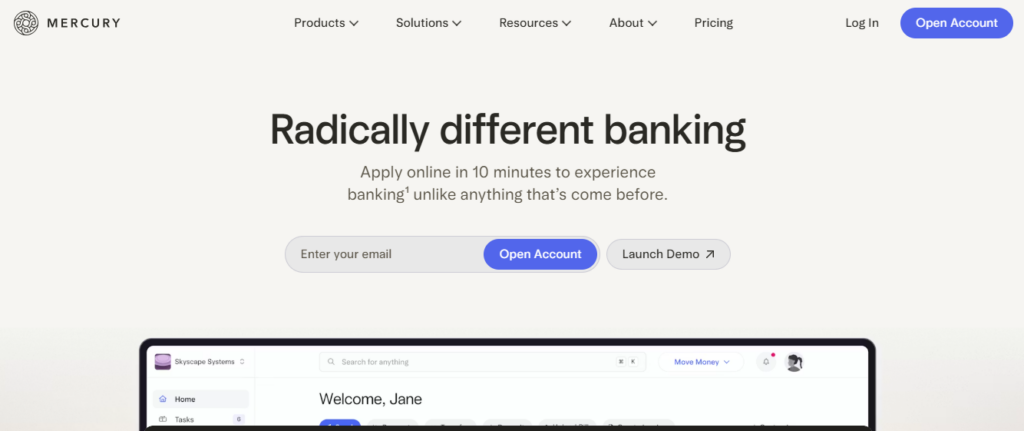
Top Pick: Mercury
Why in 2026: The undisputed leader for startups. Beyond flawless banking, its Mercury Raise platform is a powerhouse for investor connections. The new Mercury Treasury Vault automatically sweeps funds into money market funds (projected ~4.25% APY). Offers virtual/debit cards, granular team permissions, and powerful API access. No monthly fees or minimums.
Consider If: You are a corporation/LLC (sole proprietors ineligible) and do not handle physical cash.
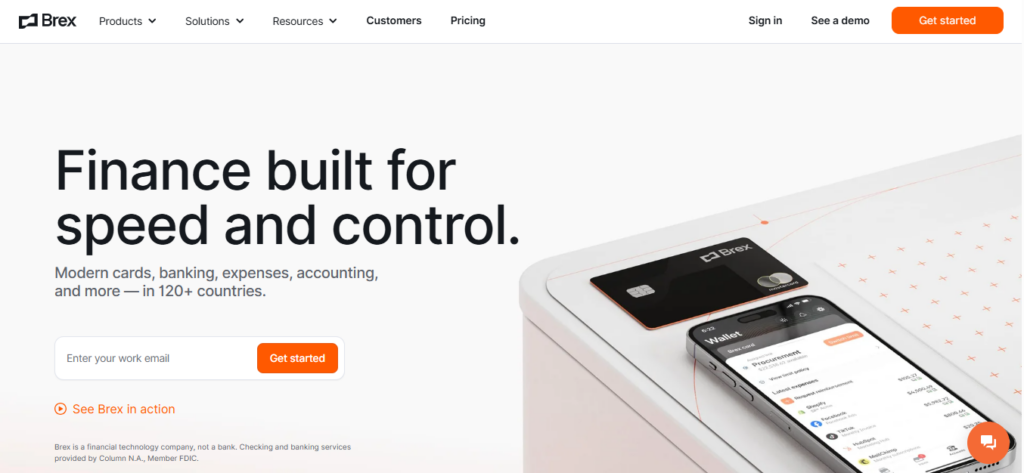
Strong Alternative: Brex
Why in 2026: A true all-in-one financial OS. Its standout feature is the Brex Card, a corporate charge card with robust spend controls and rewards tailored for business purchases (like software credits). The cash account earns a competitive yield, and its expense management software is top-tier. Built for global operations from day one.
Category 2: The Hybrid Banking Power User
For: Established LLCs, S-Corps, and businesses with a physical presence (retail, restaurants, services) that need a blend of robust digital tools and reliable branch/ATM access.
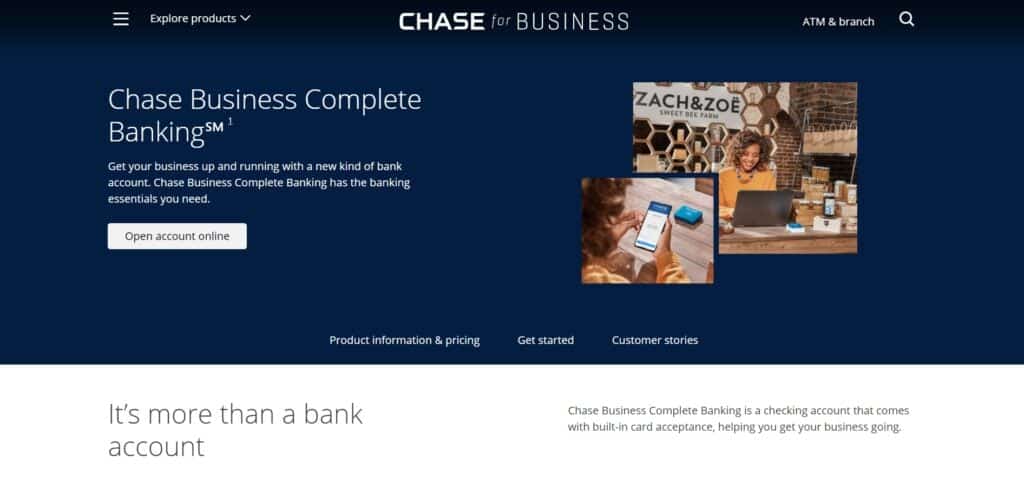
Top Pick: Chase Business Complete Banking®
Why in 2026: Unbeatable for businesses that handle cash and cards. The monthly fee is $15, easily waived with a $2,000 minimum balance or $2,000 in Chase card spend. Offers 100+ free transactions and $5,000 in free cash deposits monthly. Deep integration with QuickBooks and a superior mobile app with advanced check deposit features make it a complete package. The vast branch network is a key asset.
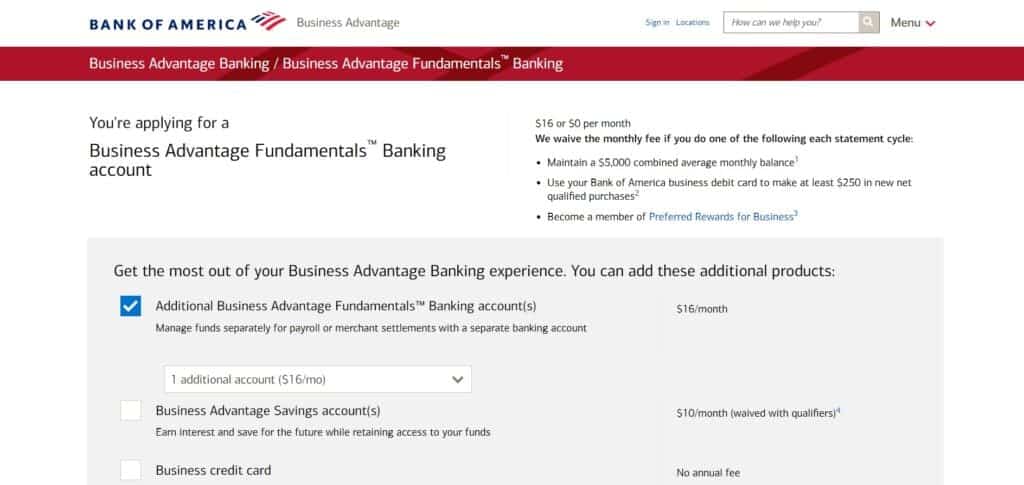
Strong Alternative: Bank of America Business Advantage Fundamentals™
Why in 2026: Excellent for businesses that also bank personally with BofA. The monthly fee is $16, waivable with a $5,000 average balance or through the Preferred Rewards program. Its AI-powered assistant, Erica, now provides cash flow forecasts. A leader in offering green business loan discounts for sustainable practices.
Category 3: The Cost-Conscious Solopreneur & Freelancer
For: Consultants, freelancers, solo LLCs, and microbusinesses prioritizing low costs, simplicity, and essential digital tools without complex requirements.

Top Pick: Bluevine Business Checking
Why in 2026: Dominates this category by offering a remarkable 2.00% APY on balances up to $250,000 with no monthly fees or minimum balance requirements, provided you meet modest monthly activity criteria (e.g., $500 in debit card spend). Includes free invoicing tools and integrates seamlessly with payment processors.
Strong Alternative: Novo
Why in 2026: Built for the digital solopreneur. No monthly fees, no minimums, and a beautifully simple app. It excels in its ecosystem of free built-in business tools and discounts (like discounted Stripe payment processing and free Trello credits). Perfect for online-based service businesses and e-commerce sellers.
Category 4: The Community-Focused & Niche Business
For: Businesses with specific affiliations (military, credit union communities) or those that are deeply local and value a relationship-based model.

Top Pick for Military: Navy Federal Credit Union Business Checking
Why in 2026: Eligibility has expanded. The Flagship Business Checking account offers 0.15% APY, no monthly fees, and 50 free transactions monthly. Its unique “Battle Buddy” mentorship program connects new business owners with experienced ones within the NFCU community.
Top Credit Union Pick: Digital Federal Credit Union (DCU) Free Business Checking
Why in 2026: Remains a stalwart for a true no-fee account. No monthly fees, no minimums, and now pays 0.45% APY on all balances. The first 400 monthly transactions are free. Membership is accessible via donation to partner nonprofits.
Frequently Asked Questions for 2026
What’s the biggest mistake businesses make when choosing a bank account in 2026?
Choosing based on fees alone. The opportunity cost of a disconnected, non-automated financial workflow far outweighs a modest monthly fee. Focus on the platform that will save you the most time and provide the best insights into your cash flow.
Are neobanks (like Mercury, Brex) safe for my business money?
Yes. Reputable neobanks partner with FDIC-member banks to insure deposits up to the standard $250,000 limit (Mercury, for example, offers up to $5 million in coverage through its partner network). They often invest more in cybersecurity and fraud prevention than traditional banks.
I handle physical cash. What are my best options?
Your choices are more limited but clear. Chase and Wells Fargo (with its Initiate Business Checking, $12 monthly fee) offer extensive ATM networks for cash deposits. Local community banks and credit unions are also excellent for personalized cash-handling service.
Do I need a “business bank account” if I’m a solo freelancer?
Yes, unequivocally. It legally separates your personal and business finances, which is critical for liability protection (especially for LLCs) and makes tax filing infinitely simpler. The digital tools offered by accounts like Bluevine or Novo are designed precisely for your needs.
How important is API access?
For tech companies, SaaS platforms, or any business that wants to build custom financial automations (like syncing real-time balances to an internal dashboard), API access is critical. Mercury leads here. For most other businesses, robust pre-built integrations (like with QuickBooks or Xero) are sufficient.
Conclusion: Align Your Account with Your Ambitions
The business banking landscape of 2026 is defined by specialization. The right choice is the platform that aligns with your operational reality and growth trajectory.
Building the next big tech venture? Look to Mercury or Brex for their growth infrastructure.
Running a local storefront or service business? A hybrid leader like Chase provides the perfect balance.
Bootstrapping a solo venture? Prioritize yield and simplicity with Bluevine or Novo.
Invest time in choosing a financial partner that acts as a force multiplier for your business. Your future self—especially during tax season or when seeking funding—will thank you.
2026 Update: Current US Small-Business Checking Fees Compared
The best no-fee US business checking accounts in 2026 are Bluevine, Mercury, Novo, Relay, and Found, all at $0 per month with no minimum balance. Major banks like Chase and Bank of America charge $15 to $16 monthly, waivable through balance or card-spend thresholds. Every figure below was checked on 24 July 2026.
| Account | Monthly fee | Key qualifier to waive the fee | Standout feature |
|---|---|---|---|
| Bluevine Standard | $0 | None to waive; earn 1.3% APY by meeting one monthly eligibility requirement | 1.3% APY on balances up to $250,000 |
| Mercury | $0 | None; no minimum balance | Mercury Treasury yield unlocks at a $250,000 balance, plus API access |
| Novo | $0 | None; no minimum balance or opening deposit | Refunds up to $7/month in ATM fees, plus built-in invoicing |
| Relay (Starter) | $0 | None; optional Grow tier is $30/mo | Up to 20 checking accounts and 50 debit cards for role-based cash management |
| Found | $0 | None; optional Found Plus is $35/mo | Built-in bookkeeping; advanced receipt scanning and automatic tax estimates on Found Plus |
| Chase Business Complete Banking | $15/mo | $2,000 daily balance, or $2,000 in Chase card spend, or $2,000 in QuickAccept deposits | Built-in card acceptance through Chase QuickAccept |
| Bank of America Business Advantage Fundamentals | $16/mo (waived for the first 12 months on new accounts) | $5,000 average monthly balance, or $500 in net new debit purchases, or Preferred Rewards for Business | Zelle for business built in |
A few notes on the numbers. Bluevine Standard stays free and pays 1.3% APY once you meet one monthly eligibility requirement, and paid Bluevine Plus ($30/mo) lifts that to 1.75% APY if you want more yield. Mercury, Novo, Relay, and Found charge nothing on their base plans, so the choice comes down to features: yield and API at Mercury, ATM-fee refunds at Novo, multiple sub-accounts at Relay, and built-in accounting at Found. Chase and Bank of America carry monthly fees, but both are straightforward to waive with a modest balance or regular card activity.
Whichever account you pick, you still need a reliable way to accept payments. UENI helps small businesses get paid online with 0% transaction fees, so more of every sale lands in your new business account.
This is a factual comparison of publicly listed pricing, not financial advice. Fees and rates change often, so confirm the current terms on each provider’s site before you apply.
2026 FAQ: No-Fee and Startup Business Bank Accounts
What is the best free business bank account in the US?
Bluevine, Mercury, Novo, Relay, and Found all offer $0 monthly-fee business checking with no minimum balance, verified in July 2026. Bluevine adds interest on your balance, Relay suits multi-account cash management, and Found builds in bookkeeping. The best pick depends on whether you value yield, sub-accounts, or accounting tools.
Can you open a business bank account with no money?
Yes. Bluevine, Mercury, Novo, Relay, and Found require no minimum opening deposit and no ongoing minimum balance, so you can open and keep an account with $0. Most traditional banks also let you open with a small deposit, though a monthly fee may apply until you meet a balance or card-spend threshold.
What do you need to open a US business bank account?
You generally need an EIN (or your SSN if you are a sole proprietor), a government-issued photo ID, and your business formation documents, such as articles of incorporation or an LLC certificate. Banks also ask for your business address, and some request a business license or details of the beneficial owners.
What is the best bank for a startup or LLC?
For a startup or LLC, no-fee online accounts like Mercury, Novo, and Relay are popular because they skip minimums and open quickly. Mercury suits venture-backed and tech startups, Relay fits teams that need several sub-accounts, and Found targets freelancers and single-member LLCs who want built-in bookkeeping (with tax tools on Found Plus).
Do online business banks have FDIC insurance?
Yes, but indirectly. Mercury, Bluevine, Novo, Relay, and Found are financial-technology companies rather than banks. They hold your deposits at FDIC-insured partner banks, so your money is covered up to the standard $250,000 per depositor through that partner bank, subject to the usual pass-through insurance conditions.