


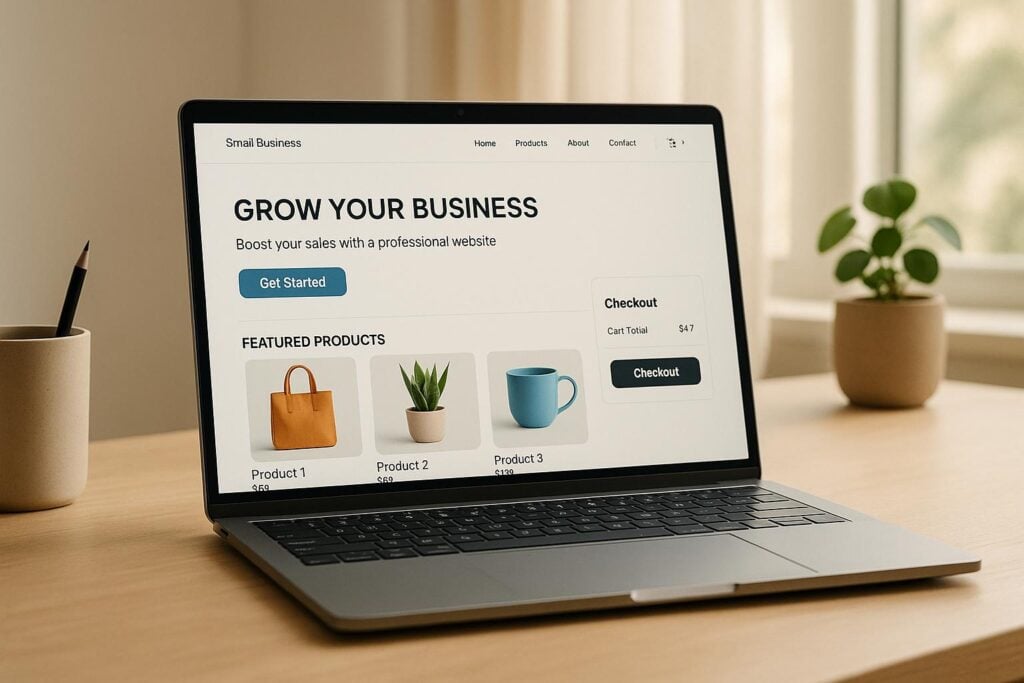
Your website is more than just an online presence – it’s a tool to increase sales and grow your business. By optimizing key aspects of your site, you can attract more visitors, convert them into customers, and retain them for the long term. Here’s how:
- Simplify Navigation: Make it easy for users to find what they need, especially on mobile devices.
- Persuasive Product Pages: Highlight benefits, use high-quality visuals, and include testimonials to build trust.
- Local SEO: Optimize for local searches to connect with nearby customers ready to buy.
- Streamlined Booking & Payment: Ensure smooth, mobile-friendly checkout experiences.
- Effective Contact Forms: Keep forms short, mobile-friendly, and strategically placed across your site.
- Automated Promotions: Use tools to engage customers with timely offers and loyalty programs.
- Consistent Branding: Maintain uniform visuals and messaging to build trust and credibility.
These strategies can transform your website into a 24/7 sales machine, helping you stay competitive and grow your revenue. Start small, focus on one or two areas, and watch as your efforts pay off.

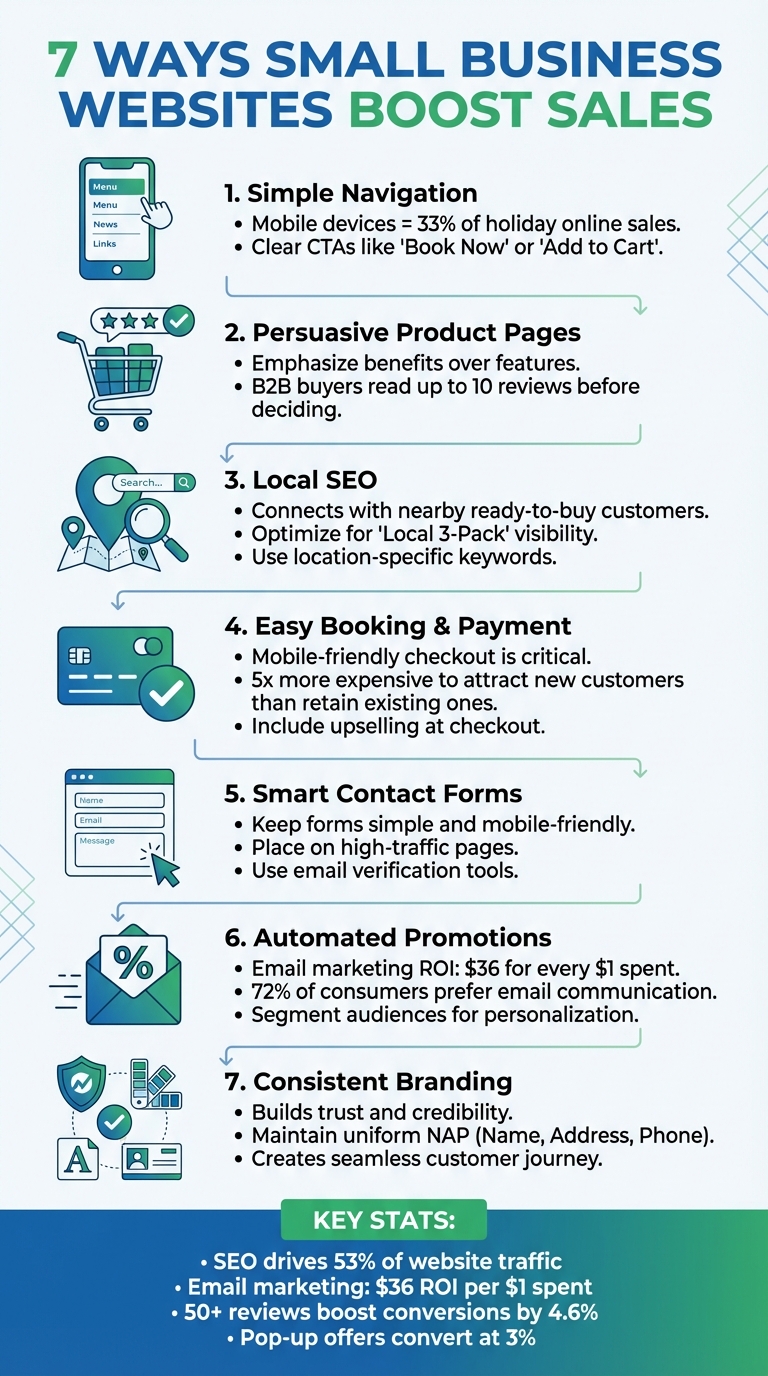
7 Ways Small Business Websites Boost Sales Infographic
1. Simple Navigation That Leads Visitors to Purchase
Improved User Experience
Your website’s navigation should make it effortless for visitors to browse, book, or get in touch. Overly complicated menus can confuse users and cause them to leave your site.
Mobile navigation is especially critical. During the holiday shopping season, mobile devices accounted for about one-third of online sales. If your site doesn’t provide a smooth experience on smartphones or tablets, you might lose potential customers. Focus on simple menus with clear, easy-to-read categories that work seamlessly on smaller screens. Avoid cluttered dropdowns that can frustrate mobile users.
A straightforward, clean layout sets the stage for design elements that encourage purchases.
Sales-Driving Design Elements
Make sure every page features bold, action-oriented calls-to-action (CTAs) like "Book Now" or "Add to Cart". Use clear, straightforward language that lets visitors know exactly what will happen when they click, ensuring the CTA feels relevant and inviting.
Keep your contact information visible on every page. Include your phone number prominently in the header, provide an easy-to-use contact form, and organize your services clearly. The fewer steps it takes for someone to reach you or make a purchase, the more likely they are to complete the process. Additionally, fast-loading pages and a visually appealing design help keep visitors engaged long enough to convert.
2. Product and Service Pages That Convince Buyers
Conversion-Focused Features That Matter
Your product and service pages should do more than just list what you sell – they need to actively persuade visitors to take action. Think of these pages as your digital salespeople, designed to guide potential buyers toward making a decision.
One key strategy is to emphasize outcomes and benefits instead of just rattling off features. For instance, instead of saying "24-hour support", explain how round-the-clock assistance ensures uninterrupted operations and peace of mind. This approach helps potential customers see the real-world value of what you’re offering.
When you combine these details with smart design choices, you create a page that not only informs but also drives conversions.
Design Elements That Drive Sales
Visuals play a huge role in convincing buyers. High-quality images, videos, and even interactive options like 3D views can give customers a clear understanding of what they’re buying, easing any hesitation. For physical products, show them from various angles; for services, use visuals that showcase the results your customers can expect.
Another must-have? Testimonials and reviews. These build trust and credibility, especially since many B2B buyers read up to 10 reviews before making a decision. Social proof can be the nudge someone needs to hit that "Buy" button.
Finally, make sure your pages load quickly – especially on mobile devices. Shoppers won’t stick around for slow-loading pages, and every second of delay could mean a lost sale. Speed isn’t just a technical detail; it’s a sales driver.
3. Local Search Presence That Attracts Ready Buyers
Increased Local Visibility
When someone nearby searches for what you offer, your business needs to be front and center. That’s the goal of local SEO – it connects you with customers right in your area, sometimes just a few blocks away. These "near-me" searches often come from people ready to make a purchase.
The foundation of this visibility is a well-optimized Google Business Profile. It directly impacts how your business shows up in Google Search and Maps, especially in the coveted "Local 3-Pack". Securing a spot here puts your business in front of potential buyers at the exact moment they’re searching for solutions.
Enhanced Conversion-Focused Functionality
This kind of visibility doesn’t just bring more traffic – it brings the right traffic. Local SEO helps you reach people who are already looking for what you provide. By incorporating local keywords – like your city, neighborhood, or even landmarks – into your content, title tags, meta descriptions, and headers, you can boost your local rankings. For instance, instead of a broad term like "plumbing services", using something specific like "emergency plumber in downtown Austin" targets customers who are actively searching for help in your area.
The real magic of local SEO lies in its ability to convert interest into action. It drives foot traffic, phone calls, and online inquiries from people with immediate needs. By optimizing for local search, your website becomes a direct channel for attracting high-intent leads who are ready to become paying customers.
4. Easy Online Booking and Payment Systems
Improved User Experience
Once you’ve nailed down smooth website navigation and compelling product pages, the next step is to simplify the booking and payment process. A hassle-free system ensures customers can complete their transactions without hitting unnecessary roadblocks. By making booking and purchasing straightforward, you reduce the chances of abandoned carts or incomplete sales.
It’s especially important to have a mobile-friendly setup, as mobile devices account for nearly a third of holiday season online sales. Your booking and payment interface should work seamlessly on smartphones and tablets, with responsive design that adapts to smaller screens. This includes ensuring payment forms, cart features, and checkout processes are intuitive and frustration-free.
Enhanced Conversion-Focused Functionality
A well-designed system does more than process payments – it actively encourages customers to complete their purchase. Clear and prominent calls-to-action (CTAs) guide users through the booking and payment journey. Features like a virtual shopping cart that automatically calculates totals, taxes, and shipping costs can speed up the process while maintaining a polished, professional feel.
For customers who might hesitate, adding a live chat option can make a big difference. Real-time support answers last-minute questions, resolves concerns, and helps guide hesitant buyers to the finish line. For service-based businesses, incorporating tools like HelloSign or DocuSign eliminates the need for clunky paperwork, further reducing the chances of drop-offs. These tools not only smooth out the transaction process but also set the stage for more advanced sales tactics.
Sales-Driving Design Elements
The best booking and payment systems don’t just handle transactions – they actively contribute to growing your revenue. Features like upselling and cross-selling can be built directly into the checkout process. For example, you can suggest bundled services, recommend complementary products, or offer loyalty program sign-ups right at the point of purchase. These strategies not only increase the average order value but also encourage repeat business.
Here’s why this matters: It costs about five times more to attract a new customer than to sell additional products or services to an existing one. By maximizing the value of each customer interaction, these design elements quickly pay off, turning a simple checkout process into a powerful sales tool.
sbb-itb-5b82b38
5. Contact Forms and Lead Capture That Convert
Improved User Experience
A contact form is your gateway to turning curious visitors into paying customers. The secret? Keep it simple and hassle-free. Ask only for the essentials, like a name and email address. Every extra field you add increases the likelihood of someone abandoning the form midway. Make sure your forms are mobile-friendly, load quickly, and clearly explain what happens after submission.
You can also integrate email verification tools directly into your forms. These tools filter out fake emails and typos in real-time, ensuring you’re gathering valid, actionable contact information. This small tweak can make a big difference in your follow-up process, turning casual inquiries into genuine opportunities.
Enhanced Conversion-Focused Functionality
Where and how you place your contact forms can significantly impact your lead generation success. Don’t limit forms to a generic "Contact Us" page. Add them to high-traffic areas like your homepage, blog posts, or service pages. Sweeten the deal by offering incentives – think exclusive discounts, free downloads, or early access to new products. These perks can dramatically increase sign-ups.
Another smart option? Web chat tools that automatically capture visitor information. These tools allow you to stay connected via email or SMS even after someone leaves your site. By strategically placing forms and using tools like these, you’ll boost your overall conversion game.
Sales-Driving Design Elements
Localization can turn an ordinary contact form into a lead-generating powerhouse. Tailor your forms to match visitor locations by adjusting phone number formats, showing prices in local currency, and offering region-specific promotions. Adding local testimonials or case studies near the form builds trust and makes your business feel more relatable to visitors from specific areas.
Don’t forget to test and refine. Even small tweaks – like changing a button color, shortening the form, or rephrasing your call-to-action – can lead to noticeable improvements. Use analytics to track which forms deliver the best leads, and focus on what works. The goal isn’t just to collect names and emails; it’s to create a steady stream of high-quality leads genuinely interested in what you offer. A thoughtful, data-driven approach ensures your forms are more than just placeholders – they’re powerful tools for growing your business.
6. Automated Promotions and Special Offers
Smarter Ways to Connect with Customers
Automated promotions make it easier to engage with customers at just the right moment. For instance, you can set up email sequences that automatically trigger when someone abandons their cart, when a new product hits the shelves, or during key seasonal sales. These timely messages can help re-engage potential buyers and drive more sales.
One of the best parts? You can segment your customer list and send messages tailored to their preferences. Let’s say someone recently bought running shoes – an email suggesting athletic socks would be a natural next step. Or if someone has been browsing winter coats, a discount code as the weather gets colder could seal the deal. By tracking metrics like open rates, click-through rates, and conversions, you can figure out what works best and refine your approach over time. It’s all about creating a system that works in the background while you focus on other areas.
Turning Shoppers into Loyal Customers
Loyalty programs are another area where automation shines. These programs can turn casual shoppers into repeat customers by awarding points for purchases, sending birthday discounts, or offering exclusive perks to your most loyal buyers. Tiered systems, where customers earn better rewards as they spend more, are particularly effective at encouraging repeat business. You can also bundle products at a discount to increase the average order value, with automation taking care of the promotional emails to announce these deals.
AI tools can take personalization to the next level. They can help you prioritize leads, send tailored messages to contacts in your CRM, and even respond to website visitors in real time. With 72% of consumers preferring email communication, automated email campaigns not only meet customer expectations but also free up your time to focus on other priorities. It’s a win-win for both you and your audience.
7. Consistent Branding That Builds Customer Trust
Sales-Driving Design Elements
Using the same colors, fonts, and logos across all your digital platforms isn’t just about looking professional – it’s about building trust. When customers recognize your brand instantly, it reassures them of your credibility, which plays a big role in their buying decisions. Think of it as creating a visual handshake that says, "We’re reliable."
It’s also critical to keep your business details consistent everywhere online. Your name, address, and phone number should match exactly across your website, Google Business Profile, Facebook page, and directory listings. Even small differences – like "123 Main St." versus "123 Main Street" – can make your business seem less reliable. Uniformity in these details not only boosts trust but also helps with online discoverability.
"A strong online presence is more than just having a website or social media accounts. It’s about making a clear, impressive online identity that shows your brand values and connects with your customers."
– Itamar Haim, Elementor
This consistent visual identity lays the groundwork for a smooth and trustworthy customer experience across all digital touchpoints.
Enhanced Conversion-Focused Functionality
Brand consistency isn’t just about looking good – it’s about making the buying process easier and more intuitive. When customers experience a seamless transition from your social media to your website and all the way through checkout, they feel more confident in their decision to buy. A smooth, cohesive journey builds the trust and comfort needed to close the sale.
Consistency also applies to how you communicate. Whether it’s your product descriptions, email campaigns, or social media posts, maintaining the same tone and message reinforces your reliability. As Teamgate puts it, "A well-defined sales strategy ensures that every customer touchpoint reflects your brand’s value proposition, increasing customer trust and loyalty." When your audience knows what to expect from your brand, they’re more likely to trust you – and that trust often translates into a purchase.
Conclusion
Your website operates as a round-the-clock sales machine. The seven strategies we’ve discussed – streamlined navigation, persuasive product pages, local SEO, seamless payment systems, smart lead capture, automated promotions, and consistent branding – can transform casual browsers into loyal customers.
And the results? They speak for themselves. SEO accounts for 53% of website traffic, email marketing delivers an average return of $36 for every dollar spent, having over 50 product reviews can boost conversions by 4.6%, and pop-up offers convert at a rate of 3%. These aren’t just numbers; they’re evidence of real revenue increases for businesses that adopt these methods.
The best part? You don’t need to be a tech wizard to get started. Focus on tackling one or two key areas first – like simplifying your checkout process or verifying your Google Business Profile. Small, consistent improvements add up, turning your website into a revenue-driving powerhouse over time.
If you’re looking for a hassle-free option, UENI offers a complete solution with custom domains, SEO optimization, and e-commerce features – all ready to go in just 7 days. Their service starts at $16.99/month and includes unlimited professional edits, ensuring your website evolves as your business grows.
These strategies aren’t just ideas – they’re proven methods. Put them into action and start capturing the customers already looking for businesses like yours.
FAQs
How can I make my website easier to navigate on mobile devices to improve sales?
To make your website’s mobile navigation more effective and drive more sales, prioritize a mobile-friendly design that adapts seamlessly to various screen sizes. Keep menus straightforward with clear, tap-friendly buttons, cut down on unnecessary visual elements, and ensure your site loads fast. A streamlined and easy-to-use mobile experience keeps visitors engaged longer and motivates them to act, ultimately boosting conversions.
What makes a product page effective at driving sales?
An effective product page does more than just display a product – it grabs attention, builds trust, and encourages customers to take action. Start with clear, compelling headlines that immediately communicate the product’s value. Pair this with high-quality images or videos that show the product from multiple angles, giving customers a complete view of what they’re buying. Keep descriptions short and benefit-focused, emphasizing how the product solves a problem or improves the buyer’s life.
To build trust, include customer reviews, ratings, or testimonials that show real-world satisfaction. Add localized details, like pricing in USD ($) and accurate shipping information, so the page feels personalized for your audience. And don’t overlook the technical side – make sure the page is fast to load, simple to navigate, and features a bold, can’t-miss call-to-action like "Add to Cart" or "Buy Now." These elements work together to create a seamless shopping experience that drives conversions.
How can local SEO help my small business attract nearby customers?
Local SEO is a powerful way to help your small business shine in local search results, making it easier for nearby customers to discover you. By focusing on strategies like optimizing for "near me" searches and ensuring your business is visible on maps and local directories, you can attract more foot traffic and online inquiries.
This approach is especially valuable for businesses that depend on a local customer base. It connects you with people actively looking for the products or services you offer in your area. Beyond improving visibility, it also builds trust and credibility with potential customers in your community.