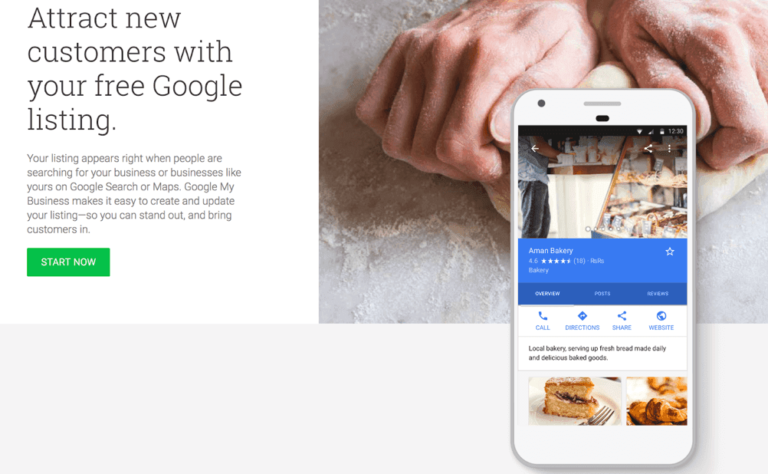
Your Google Business Profile is the single highest-leverage free marketing asset a small business owns in 2026. It’s what Google shows in the map pack, in Maps, in mobile searches with local intent, and increasingly in AI-generated answers. This guide walks through everything: the rename from Google My Business to Google Business Profile, the setup and verification flow, the optimization moves that actually move rankings, how to collect and respond to reviews, when posts and Q&A matter, what to do with multiple locations, and how to read the performance data Google gives you for free.
Key takeaways
- Google renamed Google My Business to Google Business Profile in late 2021. The product is the same, the URL the operator uses to manage it has changed, and most management now happens directly in Google Search and Maps rather than a separate dashboard.
- The five highest-ROI Google Business Profile optimisation moves: pick the most specific primary category Google offers, write a complete description, add at least 10 photos, set accurate hours including holiday hours, and collect ten or more Google reviews above a 4.5 average.
- Per Google’s own documentation, most postcard verification codes arrive within 14 days, and the review of the submitted code can take up to five business days after that. Some businesses qualify for instant verification through Search Console or video verification. Without verification, the profile cannot rank in the map pack.
- The map pack ranks on three signals: relevance (how well your profile matches the query), distance (how close you are to the searcher), and prominence (review volume, review rating, website authority). Two of three are within an owner’s control.
- Bad reviews are a fact of life for any business with volume. Google has a formal flagging process for reviews that violate its policies. Our companion guide on how to remove bad reviews from Google My Business walks through it.
Google Business Profile vs Google My Business: what changed
Google renamed the product from Google My Business to Google Business Profile in late 2021. The underlying service is unchanged. The same listing, the same categories, the same reviews, the same Insights data. What changed is the management surface. The standalone Google My Business app was retired, and the dashboard was folded into Google Search and Google Maps. To edit your Google Business Profile in 2026, search for your business name in Google while signed in to the owner account, and the editing controls appear directly above the search results.
Most operators still call it “Google My Business” or “GMB” out of habit. Both names refer to the same Google Business Profile. You’ll see the old name throughout the small-business marketing world for years to come. We use both names in this guide so that whichever you searched for, you’re in the right place.
How to set up your Google Business Profile
The setup flow has three stages: claim the listing if one exists, create a new listing if none does, and submit accurate business information that Google can verify against external signals (your website, public phone listings, government registrations).
Claim or create the listing
Search your business name in Google Maps. If Google already has a profile for your address (often it does, auto-generated from public data), there’s a “Claim this business” link. Click it. If no profile exists, go to google.com/business and create one. Use a Google account that will stay with the business long-term — not a personal Gmail you might lose access to, and not a contractor’s account.
Submit business information
The fields that matter most for ranking are also the ones operators most often get wrong. Name should be the legal trading name with no keyword stuffing (do not write “Joe’s Plumbing — 24/7 Emergency Plumber Near You”; just “Joe’s Plumbing”). Address must match the address on your website, your other directory listings, and any government registrations exactly. Phone number must be a local number (not a generic call-tracking number that points to a different city), because Google treats geographic phone numbers as a relevance signal.
Hours need to be accurate including holiday hours. Google penalises profiles where customers arrive at a closed business expecting it to be open — the most common reason for the “is this place still open?” prompt that appears under profiles with stale hours.
How to verify your Google Business Profile
Without verification, your Google Business Profile cannot rank in the map pack. Verification proves to Google that you actually run the business you’re claiming to own.
Google offers four verification methods, picked automatically based on the business type and how much Google already trusts the signals: postcard (a code mailed to the business address — Google says most codes arrive within 14 days, and the review of the submitted code can take up to five business days after you enter it), phone (a code read out via automated call), email (less common, mostly for service-area businesses), and video (a Google Business Profile call where you show your storefront, signage, and equipment). Some businesses qualify for instant verification if the website is verified in Search Console under the same account, or if the address has been Google Street View-verified.
If the postcard hasn’t arrived within Google’s 14-day window, request a new code. Postcards get lost, addresses get misread. Don’t keep waiting silently — the profile cannot rank until verification completes.
How to optimize your Google Business Profile
The setup gets you a profile. Optimisation is what makes it rank. The order below is roughly highest-ROI first, but all of it matters for businesses competing in active local categories.
Pick the most specific primary category
This is the single highest-leverage Google Business Profile decision. Google has thousands of categories ranging from broad (“Restaurant”) to extremely specific (“Vegan Restaurant”, “Cantonese Restaurant”, “Halal Restaurant”). Pick the most specific one that genuinely matches what you do. A pizzeria categorised as “Restaurant” competes with every restaurant in town for “restaurant” searches; a pizzeria categorised as “Pizza Restaurant” wins “pizza near me” searches with far less competition.
Add secondary categories for everything else you genuinely offer (a bakery that also sells coffee can add “Coffee Shop” as secondary). Don’t add categories you don’t actually serve — Google’s algorithms detect mismatched categories from review content and customer behaviour, and they downgrade profiles that game the system.
Write a complete description
You get a few hundred characters in the description field — use them. The description doesn’t directly affect ranking in most cases, but it does affect click-through from the profile to your website, and indirectly feeds Google’s understanding of what you do. Lead with what you offer, where you serve, and a single proof point. Skip phrases like “we strive to” and “passionate about” — those are filler. A good description reads like a tight elevator pitch: who you are, what you do, who you serve, and what makes you the right choice.
Add at least ten photos
Google’s photo guidance recommends adding category-specific photos so the profile stands out in Search and Maps. In our experience, profiles with rich photo coverage convert impressions to clicks at a meaningfully higher rate than profiles without. Add ten or more across these categories: exterior (so customers can recognise the building), interior (atmosphere), team (face of the business), products or food (what you actually sell), and one or two action shots (the business in operation). Refresh every quarter. Stale photos signal a stale business.
For restaurants and food-led businesses, photos do extra work — they show up in Google Search’s image carousel for queries like “restaurants near me”. Our roundup of 30 restaurant website examples covers the kind of food photography that travels well from Google Business Profile to website to social.
Configure services and attributes
The “Services” section lets you list each thing you offer with a description and a price (or “price on request”). Filling this in helps Google match your profile to specific service queries (“oil change”, “root canal”, “wedding cake”) rather than only matching on the broad category. Attributes — wheelchair accessible, free Wi-Fi, outdoor seating, women-owned business, veteran-owned business — appear in the profile’s “About” section and feed Google’s filters when searchers narrow results.
How to collect and respond to Google reviews
Reviews are the third pillar of map pack ranking (the “prominence” signal), and the single biggest lever on click-through from impressions to visits. In our experience, a profile with dozens of reviews at a 4.7-ish average tends to convert impressions to clicks at a higher rate than a profile with only a handful of reviews at a near-perfect average — volume matters as much as rating, up to a point.
Collect reviews systematically
Don’t wait for reviews to happen organically. Set up a process that turns every happy customer into a review request. Send a short SMS or email the same day, with the direct review link from Google Business Profile (Google generates one for you under “Get more reviews”). Make it one tap. Asking ten happy customers and converting two is normal; asking zero and getting zero is the default failure pattern.
Respond to every review promptly
Respond to positive reviews briefly and warmly (no template language — Google detects copy-paste responses). Respond to negative reviews factually and calmly, without arguing the reviewer down. In our experience, the audience for negative-review responses isn’t the reviewer; it’s the next ten prospects reading reviews to decide whether to choose you. A measured, owner-led response within a couple of days tends to do more for conversion than the negative review does to hurt it.
Removing reviews that violate Google’s policies
Google removes reviews that violate its policies — spam, off-topic content, conflicts of interest, hate speech, personal information, or reviews from someone who never interacted with the business. The formal flag-and-appeal process is documented in our guide on how to remove bad reviews from Google My Business. Note that “the review is wrong” or “the customer is mistaken” is not grounds for removal; only policy violations are.
Google Business Profile posts and Q&A
The “Posts” feature lets you publish short updates that appear on your profile for a limited window (events have longer expiry than standard updates). Posts don’t directly affect ranking, but they do affect click-through, particularly for businesses where current information matters: restaurants posting today’s specials, retailers posting limited-time offers, service businesses announcing seasonal availability. Aim for one or two posts per week if you genuinely have something to say. Don’t post for the sake of posting; thin posts are worse than no posts.
The “Questions and answers” section is public, customer-driven, and most owners ignore it. Don’t. Anyone can post a question on your profile and anyone (including you) can answer. Owner answers carry more weight than third-party answers, and proactively seeding the most common questions yourself (“Do you take reservations?”, “Is parking available?”, “Do you cater?”) prevents random users from posting incorrect answers that Google then surfaces to searchers.
Managing multiple Google Business Profiles for multi-location businesses
For businesses running many locations, Google offers a bulk-management tool called Business Profile Manager (formerly the Google My Business dashboard) where all locations sit under a single Google account. For small location counts, the in-Search/Maps editing flow handles each one fine.
The single biggest mistake multi-location businesses make is treating Google Business Profile as a corporate channel and posting identical content across every location. Don’t. Each location is a separate profile with its own reviews, photos, hours, and posts. The location manager should own the local one — corporate marketing can support, not replace. Google’s algorithm rewards profiles that look operated by someone who actually works there.
Tracking performance with Google Business Profile Performance
Google renamed the Insights tab to Performance more recently (the dashboard you’ll see in the modern UI is called Performance). The data is the same: how many people searched and found your profile, how many clicked through to your website, called you, requested directions, or saved the listing. The Performance dashboard sits in the profile’s editing surface in Google Search.
The metrics worth watching weekly: total impressions (relevance + prominence), website clicks (profile-to-website conversion), direction requests (intent to visit), and phone calls (intent to buy). A healthy Google Business Profile typically sees these numbers grow month over month as the profile matures. A flat line for three months usually means the optimisation hasn’t landed; revisit categories, photos, and reviews before declaring the channel “tapped out”.
How Google ranks Google Business Profiles in the map pack
Google’s official documentation describes three ranking factors for local results: relevance, distance, and prominence. Relevance is how well the profile matches the query — categories, services, name, description all feed this. Distance is how close the business is to the searcher’s location at the moment of search. Prominence is Google’s measure of how well-known the business is — review volume, review rating, website backlinks, mentions in news and directories.
Two of these (relevance, prominence) are within an owner’s control. The third (distance) is determined by the searcher. The implication is the right one for most businesses: invest in the two you can move, and accept that you won’t out-rank a closer competitor for the most location-specific searches. Compete on the searches where prominence and relevance outweigh distance — branded queries, specific-service queries, and the “near me” searches where Google’s distance threshold is generous.
Frequently asked questions
Is Google My Business still called Google My Business?
No. Google renamed it to Google Business Profile in late 2021. The product is functionally identical. Most operators and most blog content still use the old name out of habit, and Google itself still uses the term in some of its older documentation. Both names refer to the same Google Business Profile.
How long does Google Business Profile verification take?
Per Google’s documentation, most postcard verification codes arrive within 14 days, and after you enter the code, the verification review can take up to five business days. Phone and email verification are usually instant. Video verification involves scheduling a brief call with Google, typically completing within a few business days. If the postcard hasn’t arrived in the expected window, request a new code rather than waiting indefinitely.
Why is my business not showing up on Google?
The most common reasons in order of frequency: the profile isn’t verified yet, the primary category is too broad, the address is inconsistent across the web (your website, Yelp, Facebook, and Google all need to match), the business is in an extremely competitive local category (legal, dental, plumbing) where the top three slots are locked up by long-tenured competitors, or the profile has been flagged or suspended for a policy violation. Check verification status first; if that’s fine, look at category specificity next.
How often should I post to Google Business Profile?
One to two times per week if you have something genuinely worth posting (a new menu item, a promotion, a seasonal hours change, an event). Don’t post for the sake of posting. Thin filler posts can actually reduce click-through because they push useful information further down the profile. Standard posts also expire after a short window (events get longer windows), so frequency matters less than timing relative to when customers search.
Can I have multiple Google Business Profiles for the same business?
For a single physical location with one address and one phone, no — Google will flag the duplicate and consolidate them, often badly. For a business with multiple separate locations, yes — each location gets its own profile with its own address, phone, hours, and reviews. For a service-area business that serves multiple cities from one base, you get one profile with a defined service area, not separate profiles per city. Trying to game the system with multiple profiles is one of the most common reasons for suspension.
How do I rank higher in the Google map pack?
In order of typical impact: pick the most specific primary category Google offers, get to ten or more reviews above a 4.5 average, add ten or more photos, fill in services and attributes completely, keep hours accurate, build links to your website from local sources (chamber of commerce, local press, partner businesses), and post regularly if you have real content. The single biggest mistake operators make is treating Google Business Profile as set-and-forget; it rewards consistent attention over months, not one-off optimisation.
Next steps
If your Google Business Profile is unverified, claim and verify it today. If it’s verified but bare, work through the optimisation list above in order — categories first, then description, then photos, then services, then attributes. If it’s optimised but not getting reviews, set up a review-request process that runs the day of service, not weeks later.
If you don’t have a website yet, the Google Business Profile is doing double duty — and it’s not enough on its own. Google’s local algorithm uses your website as a relevance and prominence signal. A complete Google Business Profile with no website ranks below a complete Google Business Profile with a real website, all else equal. UENI builds a done-for-you small business website in seven days, with Google Business Profile setup and optimisation included in the package.
For the full step-by-step, see our best dental website examples guide.
For the broader picture of how Google Business Profile fits into a full small-business marketing mix, our guide to 12 small business advertising ideas for 2026 covers when to invest in GBP optimisation versus paid channels.
Sources
- Google, Improve your local ranking on Google — Google’s official documentation of the three local-ranking factors (relevance, distance, prominence). Retrieved 26 May 2026.
- Google, Add photos and videos to your Business Profile — Google’s guidance on photo categories and their effect on profile engagement. Retrieved 26 May 2026.
- Google, Verify your business on Google — Google’s official documentation of the postcard verification timeline (“Most codes arrive within 14 days” and “verification review can take up to 5 business days”). Retrieved 26 May 2026.
All other observations in this article (typical verification timelines, optimisation prioritisation, posting cadence, multi-location patterns) are drawn from UENI’s experience supporting small business owners through Google Business Profile setup and maintenance, and from common patterns across the small-business marketing community. Presented as typical ranges rather than figures attributed to a single external source.