An engaging real estate web design is pivotal in capturing and maintaining the attention of visitors to your site. A sleek, contemporary, and responsive design guarantees that your website exudes professionalism and leaves a lasting impact on potential clients.
Why Is a Great Website Design for Real Estate Imperative for Your Business?
Are you engaged in the real estate or building industry? Seeking to publicize your property listings and services to a local or even a global audience? As a real estate professional, possessing a captivating website can and should differentiate you from competitors. A realtor website design does more than just promote your property listings; it aids in building brand recognition, providing a platform that tirelessly works in your favor.
An expertly crafted real estate web design is the cornerstone of your promotional strategy. It showcases your properties, underscores your proficiency, and connects you with potential customers. In this digital age, having an online footprint is not a luxury but a must-have.
With an increasing number of people depending on the internet for property hunts, it’s crucial to cultivate a robust online presence that exhibits your brand and services.
To begin with, a website for real estate acts as a digital display for your enterprise. It allows potential clients to peruse your property listings, comprehend your services, and assess your expertise. This instills credibility and trust, leading to a surge in inquiries and, eventually, heightened sales especially if you’re an independent real estate agent.
Additionally, a well-constructed real estate web design is an effective instrument for generating website visitors and in turn, leads. By tactically incorporating contact forms and call-to-action prompts throughout the site, you can obtain visitor data and construct your client database. Keep in touch with prospects and transform them into clients.
Subsequently, a website design real estate proves to be a potent device for content promotion and extensive client outreach. By adeptly crafting engaging and insightful blog posts, you can flaunt your expertise in your niche, attracting more visitors to your online platform. This strategy not only elevates your real estate website’s traffic but also enhances your search engine ranking positions.
Lastly, a real estate web site design facilitates your interaction with potential visitors on social media. By integrating social sharing buttons, you can motivate site visitors to disseminate your content and listings, broadening your reach and improving online visibility.
Undoubtedly, a great looking real estate website design is a vital element of your promotional strategy. It empowers your insurance business to exhibit its top properties, connect with potential clients, and extend your reach, ultimately leading to increased sales and business growth.
Lets dive into real estate website design in a bit more detail.
Table of Contents
What Makes a Good Real Estate Website?
A high-performing real estate website captivates with its aesthetics, focuses on user-friendliness (particularly for mobile users), and furnishes valuable information. It should be uncomplicated to navigate and optimized for search engines, facilitating potential clients in finding your business effortlessly.
- Aesthetic Impact: A visually compelling website catches the attention of website visitors and motivates them to explore more of your real estate website. High-quality images, a tidy design, and a consistent color scheme contribute to a professional and appealing website that builds trust.
- User Experience: A user-oriented website is easily navigable, enabling visitors to quickly and efficiently locate the information they require. Transparent menus, instinctive search features, and adaptive design are essential for a smooth user experience. Intuitive design is always beneficial.
- Mobile Responsiveness: Considering the increasing number of users browsing the internet via mobile devices, it’s pivotal to ensure your website is adaptable and performs well on various screen sizes.
- Informative Content: Supplying valuable data about the property listings, local areas, and the real estate market helps affirm your expertise as a real estate company and keeps visitors engaged. Guarantee that your property listings are comprehensive, current, and accompanied by high-definition images or videos.
- Lead Capture Forms: A great real estate website should be configured to capture leads. Incorporating contact forms, call-to-action buttons, and live chat options can aid you in gathering information from website visitors and follow up with potential clients.
- SEO Efficiency: To draw more visitors to your site, it’s necessary to optimize your website for search engines. This process includes integrating pertinent keywords, refining meta tags, and creating high-quality content that is updated regularly.
- Social Media Connectivity: Including social sharing options on your website makes it effortless for visitors to share your content and listings, augmenting your online visibility and reach. This level of integration supports the image of the best real estate website design. Especially important for independent real estate entrepreneurs who are looking to establish trust.
It’s fairly apparent that the best real estate website design is a perfect blend of visually compelling elements, user-friendly navigation, mobile adaptability, informative content, lead capturing techniques, SEO efficiency, and effective social media integration.
Each of these components play a crucial role in enhancing the online presence of any real estate company and generating an increased number of potential clients.
With these fundamental principles in mind, let us now proceed to explore fifteen exemplary real estate websites that exemplify these features, thereby providing practical real estate website ideas for your inspiration and understanding.
15 Examples of Real Estate Website Designs picked by UENI
Crunk Properties CS: User-Friendly and Informative
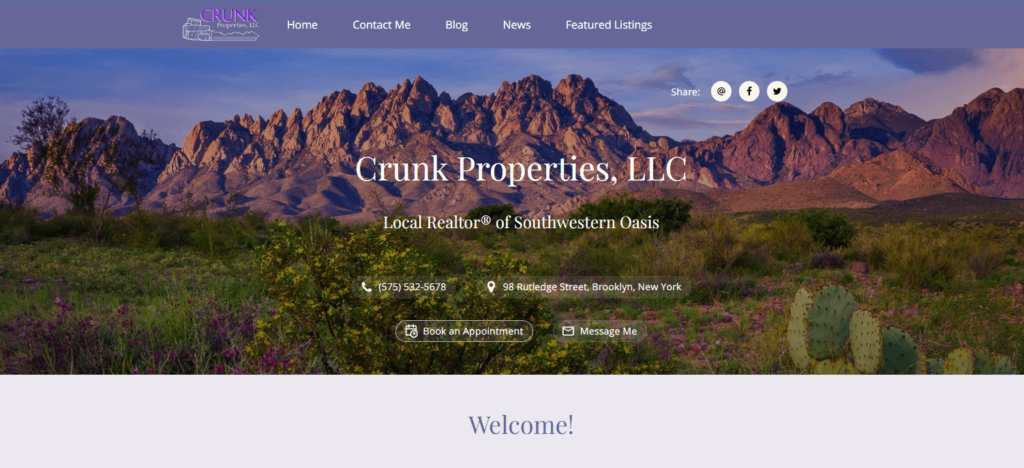
Crunk Properties CS presents a clean and user-friendly website that focuses on providing relevant information to potential clients. The homepage features a clear value proposition, inviting visitors to explore further.
Design Highlights:
- Straightforward layout and navigation
- Comprehensive property listings with images and descriptions
- Contact form for easy inquiries
- Social media integration for enhanced engagement
- Google Maps integration for convenient location searches
Sam Rafeh Realty Group: Professional and Elegant
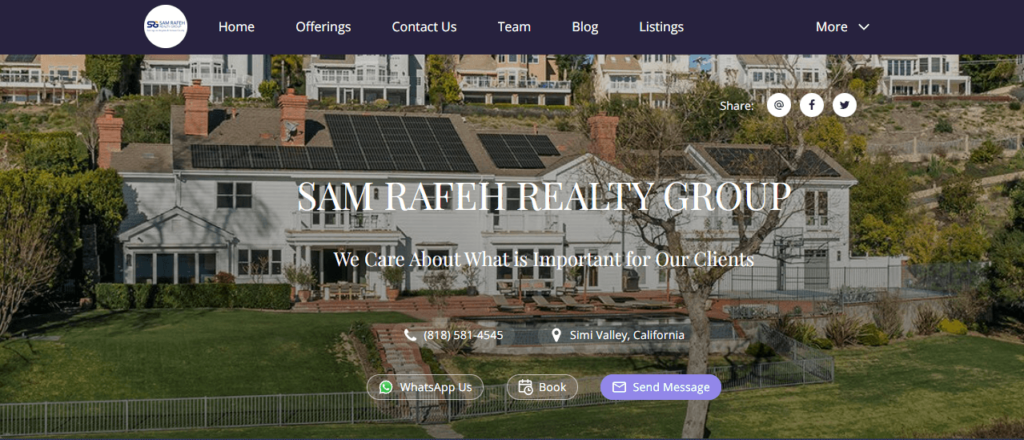
Sam Rafeh Realty Group’s website showcases a professional and elegant design, emphasizing their high-end real estate offerings. The striking visuals and sleek layout make it easy for visitors to find the information they need.
Design Highlights:
- Polished design with high-quality images
- Featured listings with essential property details
- Testimonials to build credibility
- Informative blog with market insights and tips
- Quick access to contact information and social media channels
716 Properties LLC: Clean and Modern
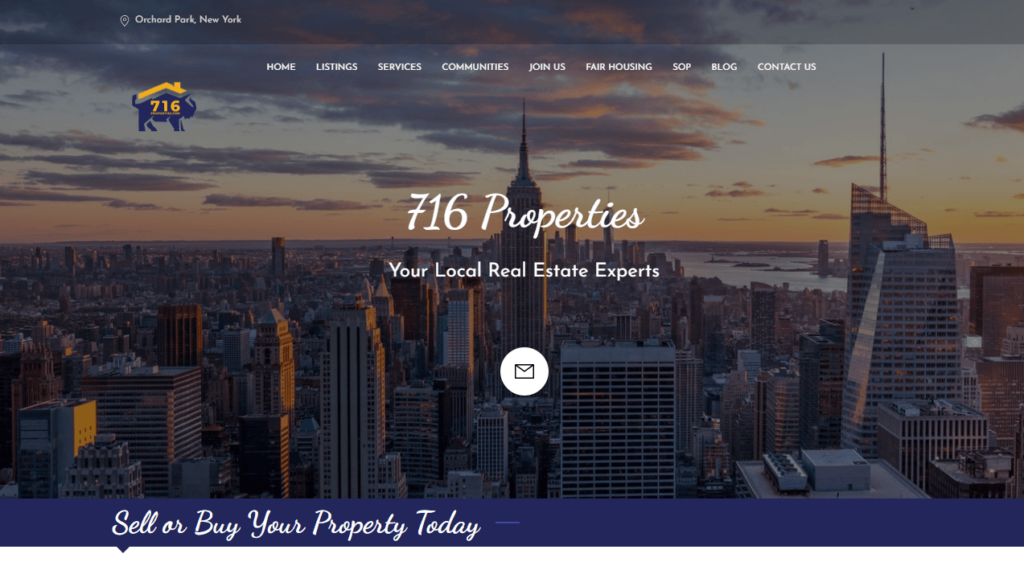
716 Properties LLC website features a clean, modern design that is both visually appealing and easy to navigate. The website provides a seamless browsing experience, offering visitors easy access to property listings and company information.
Design Highlights:
- Minimalistic design with a focus on functionality
- Comprehensive property listings with images, descriptions, and map view
- Convenient search feature for filtering listings
- Blog with useful articles and real estate news
- Prominent contact information for easy inquiries
Locd & Key Realty: Stylish and Engaging
Locd & Key Realty’s website is stylish and engaging, with a focus on high-quality visuals and a seamless user experience. The well-organized content and intuitive navigation make it easy for visitors to explore the site and find the information they need.
Design Highlights:
- Visually striking design with high-quality images and videos
- Featured listings with property details and images
- Informative blog with market updates and tips
- Easy access to contact information and social media channels
- Testimonials to establish credibility and trust
Locd Key Realty LLC: Simple and Functional
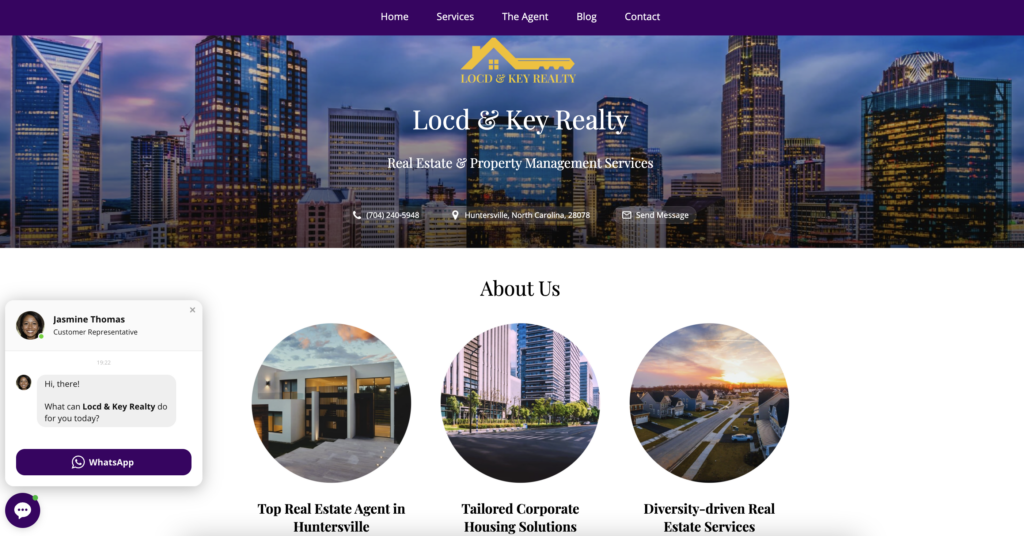
Locd Key Realty LLC’s website offers a simple and functional design that makes it easy for visitors to find relevant information about the company and its services. The straightforward layout and clean visuals create a user-friendly browsing experience.
Design Highlights:
- Clean and uncluttered design for easy navigation
- Informative content about the company and its services
- Property listings with images and descriptions
- Contact form for convenient inquiries
- Social media integration for enhanced engagement
MJ Land Sales LLC: Informative and Easy-to-Navigate
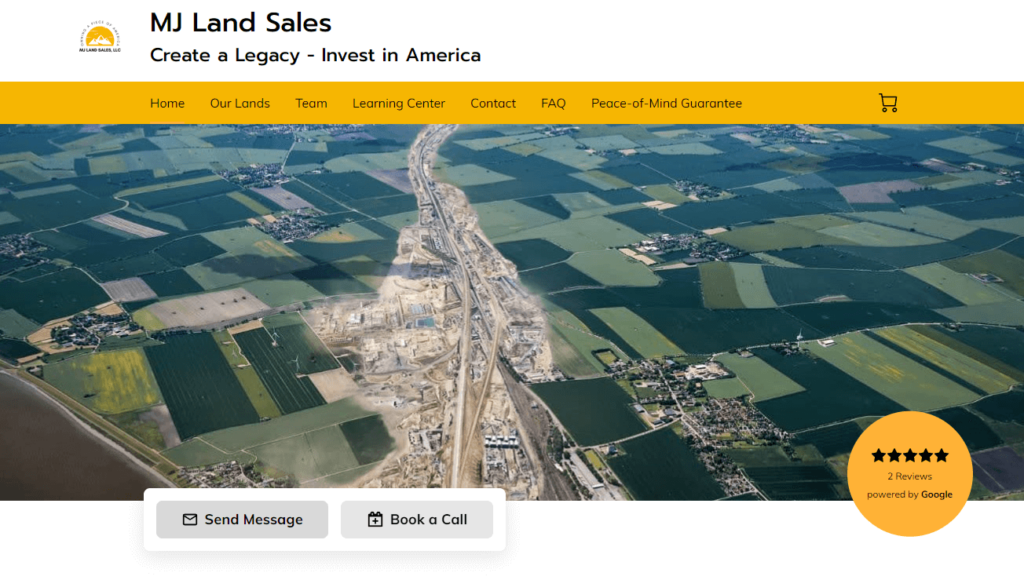
MJ Land Sales LLC’s website is designed to be informative and easy-to-navigate, providing visitors with a wealth of information about available properties and the company’s services. The clean design and simple layout make it easy for users to find the information they need.
Design Highlights:
- Clean design with a focus on functionality
- Detailed property listings with images and descriptions
- Informative content about the company and its services
- Blog with useful articles and real estate news
- Contact form for easy inquiries
Artjius Enterprises: Sleek and Professional
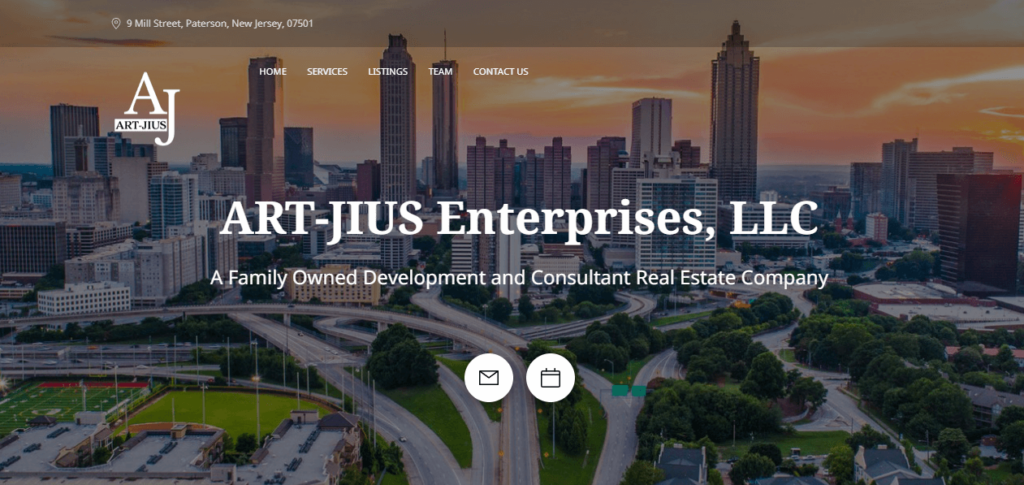
Artjius Enterprises’ website showcases a sleek and professional design that effectively communicates the company’s expertise in the real estate industry. The site is easy to navigate and offers visitors a wealth of information about available properties and services.
Design Highlights:
- Sleek design with high-quality visuals
- Comprehensive property listings with images and descriptions
- Informative content about the company and its services
- Contact form for convenient inquiries
- Social media integration for enhanced engagement
We Step On It Realty R LLC: Straightforward and Functional
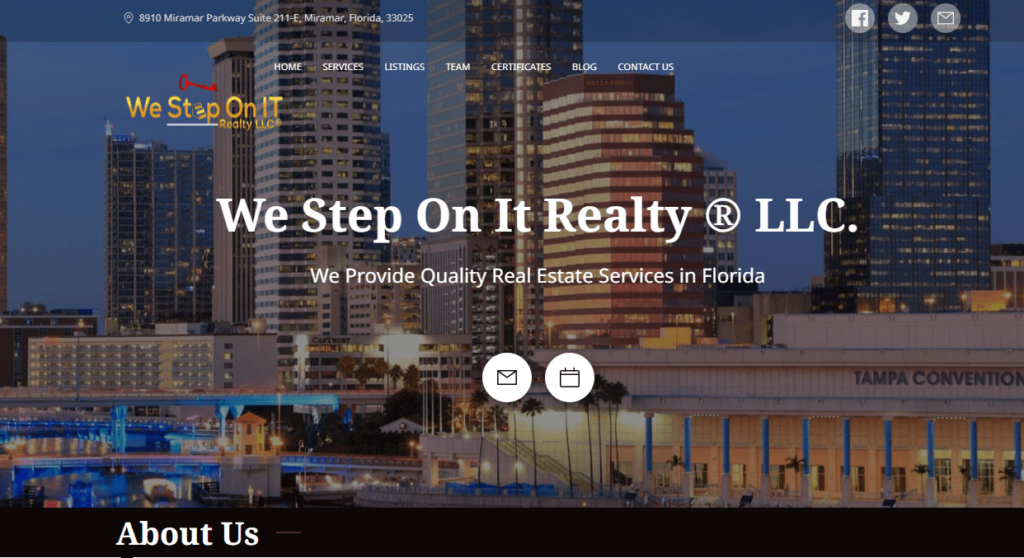
We Step On It Realty R LLC’s website offers a straightforward and functional design that makes it easy for visitors to find relevant information about the company and its services. The clean layout and well-organized content create a user-friendly browsing experience.
Design Highlights:
- Simple and clean design for easy navigation
- Informative content about the company and its services
- Property listings with images and descriptions
- Contact form for convenient inquiries
- Social media integration for enhanced engagement
Glennvue Acres LLC: Clean and Informative

Glennvue Acres LLC’s website features a clean design that prioritizes providing visitors with comprehensive information about the company and its offerings. The straightforward layout and easy navigation ensure a smooth browsing experience.
Design Highlights:
- Clean and uncluttered design
- Detailed property listings with images and descriptions
- Informative content about the company and its services
- Contact form for easy inquiries
- Google Maps integration for convenient location searches
72 Hr Cash Home Buyer: Visually Appealing and User-Friendly
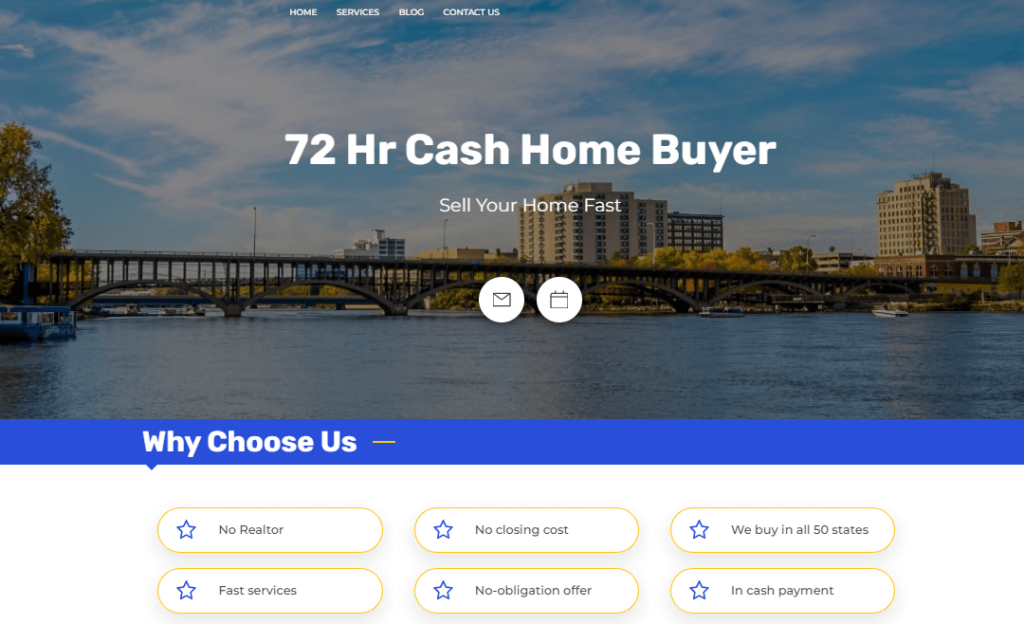
72 Hr Cash Home Buyer’s website boasts a visually appealing and user-friendly design that effectively communicates the company’s value proposition. The site is easy to navigate, offering visitors quick access to important information and resources.
Design Highlights:
- Visually striking design with high-quality images
- Clear value proposition and call-to-action
- Informative content about the company and its services
- Testimonials to establish credibility and trust
- Contact form for convenient inquiries
Sun Seekers Paradise
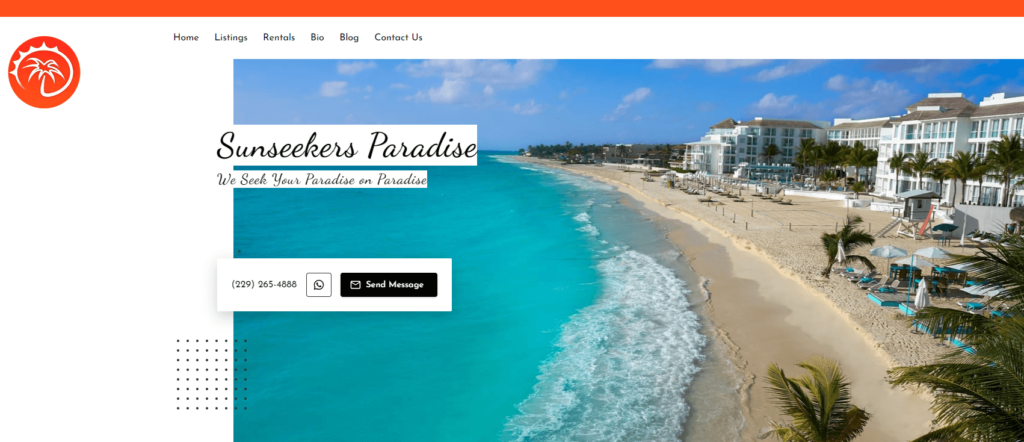
Sun Seekers Paradise’s website showcases an attractive and easily navigable design that clearly articulates the company’s offerings. The site facilitates a seamless user experience by allowing easy access to key details and resources.
Design Highlights:
- Engaging design with high-resolution images
- Direct communication of the services offered
- Detailed information about the company and its unique selling points
- Client reviews to foster trust and credibility
- User-friendly contact form for hassle-free inquiries
The Real Estate Group
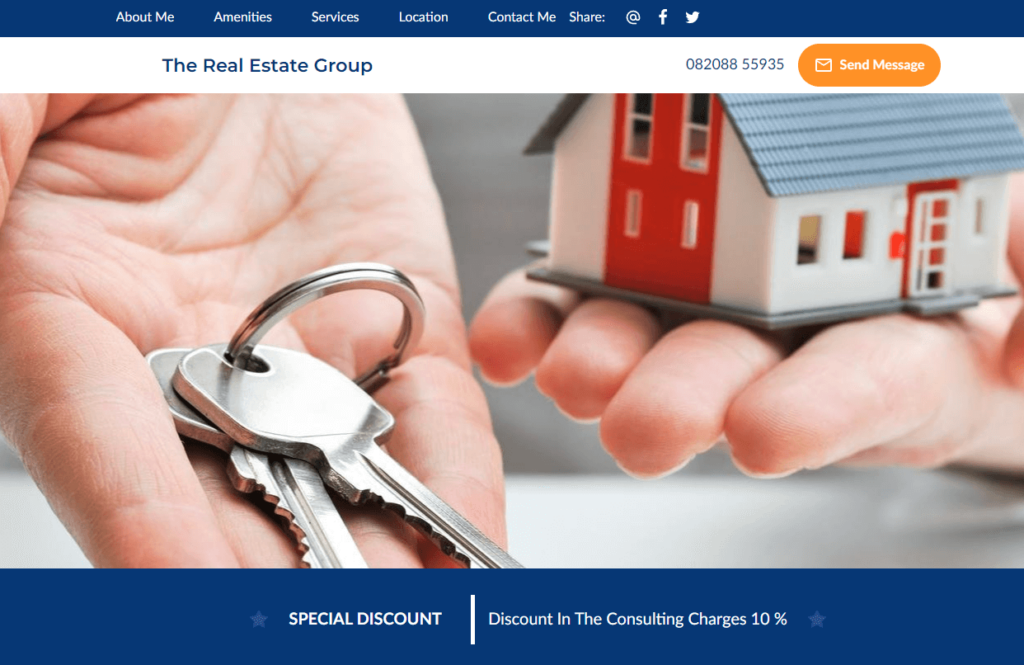
The Real Estate Group’s website presents a professional and crisp design that communicates the firm’s expertise effectively. The layout is intuitive, guiding users to essential information and resources efficiently.
Design Highlights:
- Clean and professional design
- Clear depiction of the company’s areas of expertise
- Comprehensive information about the company’s services and operations
- Trust-building customer testimonials
- Easily accessible contact form for prompt inquiries
Luxury Real Estate
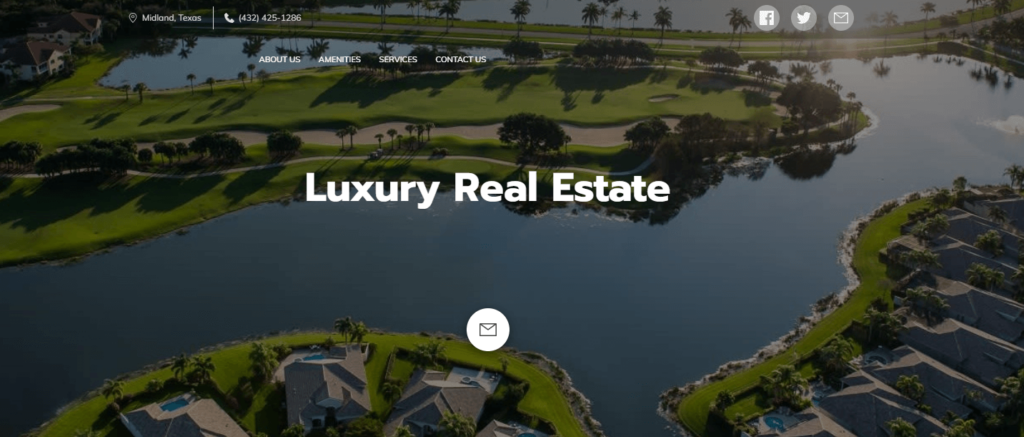
Luxury Real Estate’s website captures the essence of luxury through its elegant and visually appealing design. The site is structured in a way that allows users to effortlessly find the information they are looking for.
Design Highlights:
- Elegant and luxurious design with high-quality imagery
- Straightforward display of the company’s luxury offerings
- In-depth information about the company and its high-end services
- Customer reviews that add to the company’s prestige
- Contact form that allows easy communication for interested parties
Real Estate
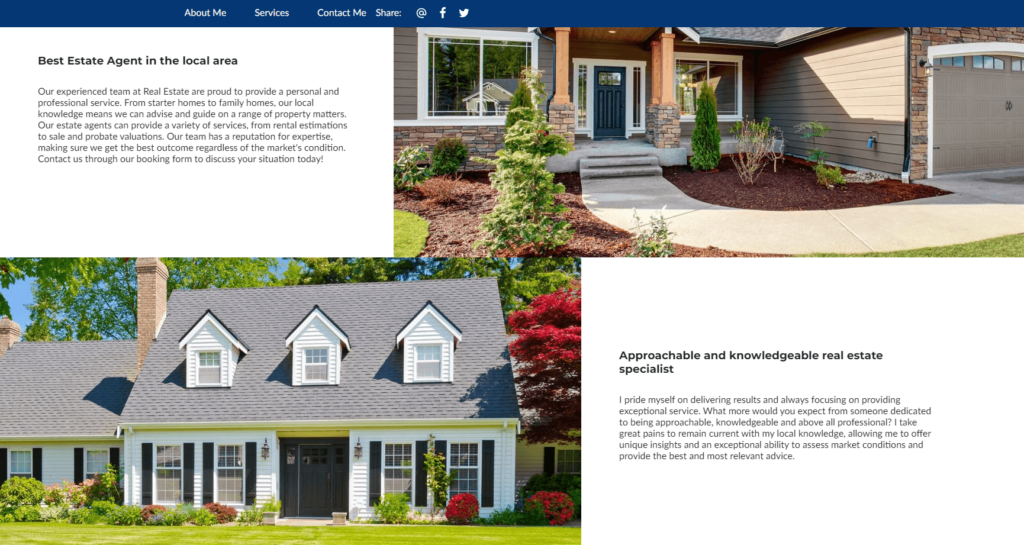
Real Estate’s website design leverages a simple yet effective design that communicates its message effectively. The site is user-friendly, facilitating easy access to essential company details and resources.
Design Highlights:
- Simple and effective design
- Direct communication of the company’s real estate services
- Informative content about the company and its services
- Credibility-establishing testimonials
- User-friendly contact form for immediate inquiries
Ray Lyon Realty LLC
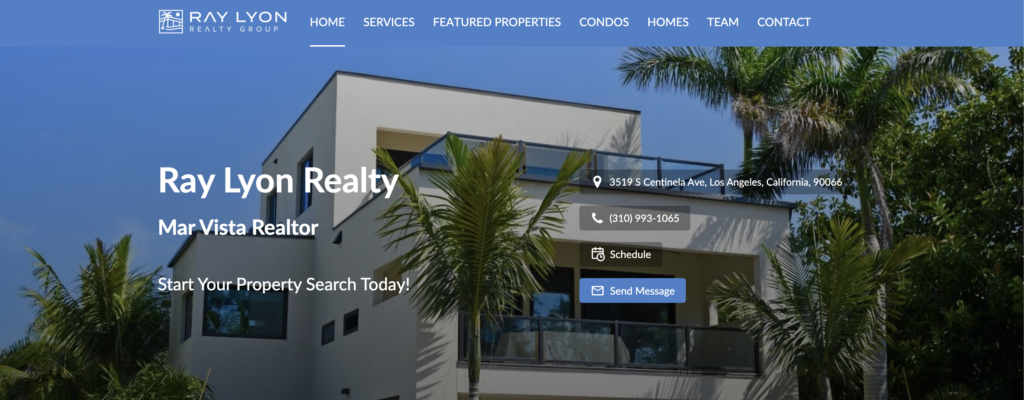
Ray Lyon Realty LLC’s website has a sophisticated and welcoming design that encourages user engagement. The layout is logically organized, offering users quick and easy access to necessary details and services.
Design Highlights:
- Sophisticated design with appealing images
- Clear articulation of the company’s real estate services
- Detailed content about the company and its unique offerings
- Client testimonials to build credibility
- Convenient contact form for quick and easy inquiries
Real Estate Website Design Key Facts You Should Know
The majority of homebuyers begin their search online: According to the National Association of Realtors, over 90% of homebuyers start their search for a new home online. This highlights the importance of having a well-designed, informative real estate website.
Mobile browsing is on the rise: With more people using mobile devices to access the internet, it’s essential that your real estate website is optimized for mobile browsing to cater to this growing audience.
SEO is crucial: A well-optimized website increases your visibility on search engines, making it easier for potential clients to find you. Incorporate long-tail keyword phrases like “real estate website templates” and “build a real estate website” into your content to improve your search engine rankings.
User experience is a key differentiator: Providing an exceptional user experience can set your website apart from competitors and encourage visitors to explore your content, interact with your brand, and ultimately become clients.
The Functionality of Your Website
- Property search and filtering options
- Interactive map features
- Lead capture forms
- Social media integration
- Interactive calculators
The Design
- Professional, modern, and clean design
- High-quality images and videos
- Consistent branding and colors
- Easy-to-read fonts
- What to Write on a Real Estate Website Homepage
Your real estate website homepage should include an attention-grabbing headline, a brief introduction to your services, featured properties, and a clear call-to-action. It should also showcase your expertise and unique selling points, highlighting why potential clients should choose you.
What Factors Matter Most for A Great Real Estate Website Design?
Responsive Design: With the ubiquitous use of mobile gadgets for internet surfing, it’s crucial to have a responsive design for your realtor website design. Ensure that your website operates well on diverse devices, including desktops, tablets, and smartphones, to deliver an optimal user experience.
User-Friendly Navigation: An uncomplicated navigation system allows visitors to promptly locate the information they seek, augmenting engagement and the likelihood of converting them into clients. Employ clear menu layouts and intuitive search filters to streamline the browsing experience.
Superior Imagery: In the real estate domain, visual appeal is paramount, as potential buyers and renters heavily depend on images to evaluate properties. Invest in top-notch photographs and, if possible, virtual tours to present your listings in the most appealing manner.
Ideally, a well-designed real estate website must have:
- High-quality images and videos of properties
- Detailed property descriptions
- Lead capture forms
- Easy-to-use search and filtering options
- Contact information
- Client testimonials and reviews
- Engaging blog content
What to Write on a Real Estate Website Homepage
Your homepage offers the initial impression visitors get of your website and establishes the mood for their browsing experience. The best real estate website design should be engaging, informative, and straightforward to navigate above all.
Additionally, consider including the following elements:
- Clear and concise headline that communicates your value proposition and captures the attention of your target audience.
- Brief introduction to your real estate services, including your specialization and unique selling points to help in establishing your expertise and build trust with potential clients.
- High-quality images or videos showcasing your listings or highlighting your local market. Visual elements like these can evoke emotions and help visitors connect with your brand.
- Featured listings that give visitors a taste of the properties you have available. Make sure to include eye-catching photos and essential details about each listing.
- Testimonials from satisfied clients to reinforce your credibility and showcase your success in the industry.
- Calls-to-action that encourage visitors to explore your website further, get in touch with you, or sign up for a newsletter.
Real Estate Website Design Takeaway Tips
Prioritize user experience: Ensure that your website is straightforward to navigate, responsive, and captivating to maintain visitor interest and motivate them to explore further.
Optimize for search engines: Embed long-tail keyword phrases like “best real estate website design” and “real estate website ideas” into your content to improve your search engine rankings and attract more organic traffic.
Professional design and top-notch images: Invest in a visually appealing design and striking photos to create a lasting impression on visitors and convey your brand identity.
Update content regularly: Keep your website fresh and relevant by adding new listings, sharing market updates, and posting informative articles on your blog.
Conclusion: Gleaning Insights from Top Real Estate Website Designs
There you have it – 30 outstanding examples of real estate websites that encompass a variety of features that business owners can look to replicate. A well-designed website is perhaps the most powerful tool for marketing a small business and connecting with potential clients.
Nowadays, creating a website for a small business doesn’t have to be complex, as there are agencies like UENI offering a range of website packages at affordable prices.
If you’re eager to get your business online with a website and require some assistance, don’t hesitate to reach out.
Get a Done-For-You website that generates more leads, bookings, and sales.
When you take into account these real estate website designs and implement the best practices in your own website design, you’ll establish a strong platform for showcasing your business and attracting new clients.
As you examine the real estate website examples mentioned, pay attention to the design features and usability elements that make them stand out. This can help you better comprehend what customers seek in a real estate website, ultimately leading to higher conversion rates and more satisfied clients.
Moreover, dedicating time and effort to a top-quality real estate website design can enhance your online presence and result in increased visibility on search engines. This helps your business get discovered by a wider audience, generating more bookings, more sales, and a stronger brand identity.
One crucial aspect to consider is integrating social media into your real estate website. Displaying client reviews, testimonials, and transformation photos of your work fosters a sense of community and highlights the expertise and craftsmanship behind your services. Additionally, offering online appointment scheduling can improve the user experience, making it convenient and seamless for potential customers to plan their visits.
In conclusion, constructing the ideal real estate website is a multifaceted task that demands careful attention to design, functionality, and user experience. By focusing on these aspects and incorporating insights from effective real estate website examples, you can create a captivating online presence that appeals to your target audience and strengthens your unique brand.
So, seize the opportunity to invest in your real estate website design and watch your business thrive. Remember that your website’s success has a direct impact on your real estate business. With the right strategies and resources, you can develop an enticing and user-centric website that attracts and retains dedicated clients for years to come.
What a real estate website has to do besides look good
The design choices that pay off are tied to what buyers actually use. In the National Association of Realtors 2025 Home Buyers and Sellers Generational Trends Report, covering purchases between July 2023 and June 2024, buyers who searched online rated photos very useful at 83 percent, detailed property information at 79 percent, and floor plans at 57 percent.
That ranking sets the job list. The site needs a listing feed that stays current, whether from an IDX connection to the MLS or from pages you update yourself. It needs lead capture where people actually land. It needs area or neighborhood pages, because 35 percent of buyers in the same NAR report called neighborhood information very useful. It needs an agent bio with real trust signals, since 47 percent rated agent contact information very useful. And it has to load fast on a phone, because listing photos are heavy.
In that same report, 51 percent of buyers found the home they purchased on the internet, against 29 percent who found it through an agent, and 55 percent said the hardest part of the process was finding the right property. A site that makes inventory easy to browse solves the problem buyers name as hardest. Source: NAR, 2025 Home Buyers and Sellers Generational Trends Report.
The pages a real estate site needs, and where the lead form goes
A small brokerage or investor site works with seven page types: a home page, a listings index, one page per listing, one page per area you cover, an about page with the agent bio, a page of sold properties or testimonials, and a contact page. Area pages do the heaviest search lifting, because people type a city or neighborhood name far more often than a company name. Our local SEO guide covers how to structure those.
On lead capture, placement beats volume. Put a short form directly under the photo gallery on every listing page, while interest peaks, and a second at the foot of each area page. Keep the phone number visible in the mobile header. Ask for name, email, phone, and the property in question, then stop. Do not wall listings behind registration. Buyers who cannot browse leave for a portal that lets them look for free.
Mobile and speed decide whether the photos ever load
Property search happens on phones. In the NAR 2025 report, whose data covers July 2023 to June 2024, 69 percent of buyers used a mobile or tablet search device, rising to 81 percent of buyers aged 26 to 34 and 82 percent of those aged 35 to 44. That is the device your listing gallery has to perform on.
Real estate sites make that harder than most. The HTTP Archive Web Almanac 2025, based on a July 2025 crawl, found the median mobile home page weighs 2,559 KB, of which 911 KB is images. Google tells site owners to aim for a Largest Contentful Paint of 2.5 seconds or less at the 75th percentile of page loads, per web.dev. Most miss it: the Almanac’s performance chapter found only 62 percent of mobile pages hit a good LCP, and just 48 percent of mobile sites pass all three Core Web Vitals.
Fixing it pays. In a Google case study published in March 2021, Vodafone ran an A/B test where a 31 percent improvement in LCP produced an 8 percent increase in total sales and a 15 percent uplift in the lead to visit rate, per web.dev. The practical version is dull: resize photos to the size they display at, serve a modern format, lazy load below the first screen, and keep the hero image small.
What it costs, and whether to build it yourself
Doing it yourself means a builder subscription, a domain, and your own time on photos, page structure, and listing updates. Done for you means someone builds it and you approve it. UENI sits in the second group, currently $79 one time setup on a limited-time offer the page bills as $520 off, then $24.99 per month, site typically live within 7 days, with a domain, a matching business email, and an SSL certificate included. For wider price ranges, see our guide to how much a website costs in 2026 and small business website design services.
Frequently asked questions
What features matter most on a real estate website?
Photos and detailed property information, by a distance. In NAR’s 2025 Home Buyers and Sellers Generational Trends Report, covering purchases from July 2023 to June 2024, 83 percent of buyers who searched online rated photos very useful and 79 percent said the same about detailed property information. Floor plans followed at 57 percent and agent contact information at 47 percent.
Do I need IDX or an MLS feed on my site?
Only if you list on an MLS and want its inventory on your own domain. An IDX feed keeps listings current automatically, which matters because stale inventory is the fastest way to lose trust. Investors, property managers, and cash buyers usually do not need it. Manually maintained listing pages work fine as long as you actually keep them updated.
How fast does a real estate website need to load?
Google’s guidance is a Largest Contentful Paint of 2.5 seconds or less at the 75th percentile of page loads, on mobile and desktop, according to web.dev. Most sites fall short. The HTTP Archive Web Almanac 2025 found only 62 percent of mobile pages reach a good LCP, and images alone account for a median of 911 KB per mobile home page.
Where should the lead capture form go?
Directly beneath the photo gallery on each listing page, and again at the bottom of each area page. Keep it to name, email, phone, and the property in question. Leave the phone number visible in the mobile header. Avoid registration walls in front of listings, since buyers blocked from browsing usually leave for a portal instead.
Do buyers still find homes through websites rather than agents?
Yes, and it is the larger share. In NAR’s 2025 Home Buyers and Sellers Generational Trends Report, covering purchases from July 2023 to June 2024, 51 percent of buyers found the home they purchased on the internet, compared with 29 percent through a real estate agent. Buyers still overwhelmingly transact with an agent, but the discovery itself now starts on a screen.