Struggling to turn website visitors into paying customers? Live chat might be your answer. Here’s why it works:
- 98% of visitors leave without taking action. Live chat engages them in real time, addressing questions before they lose interest.
- 50% of shoppers abandon purchases if they can’t get quick answers. Live chat reduces this by offering instant support.
- Customers who use live chat are 2.8 times more likely to buy and spend 60% more per purchase.
Live chat isn’t just a support tool – it’s a conversion powerhouse. By providing immediate, personalized assistance, it keeps customers engaged, reduces cart abandonment, and builds trust. Plus, with tools like AI chatbots, you can offer 24/7 support without stretching your budget. Ready to see the difference?
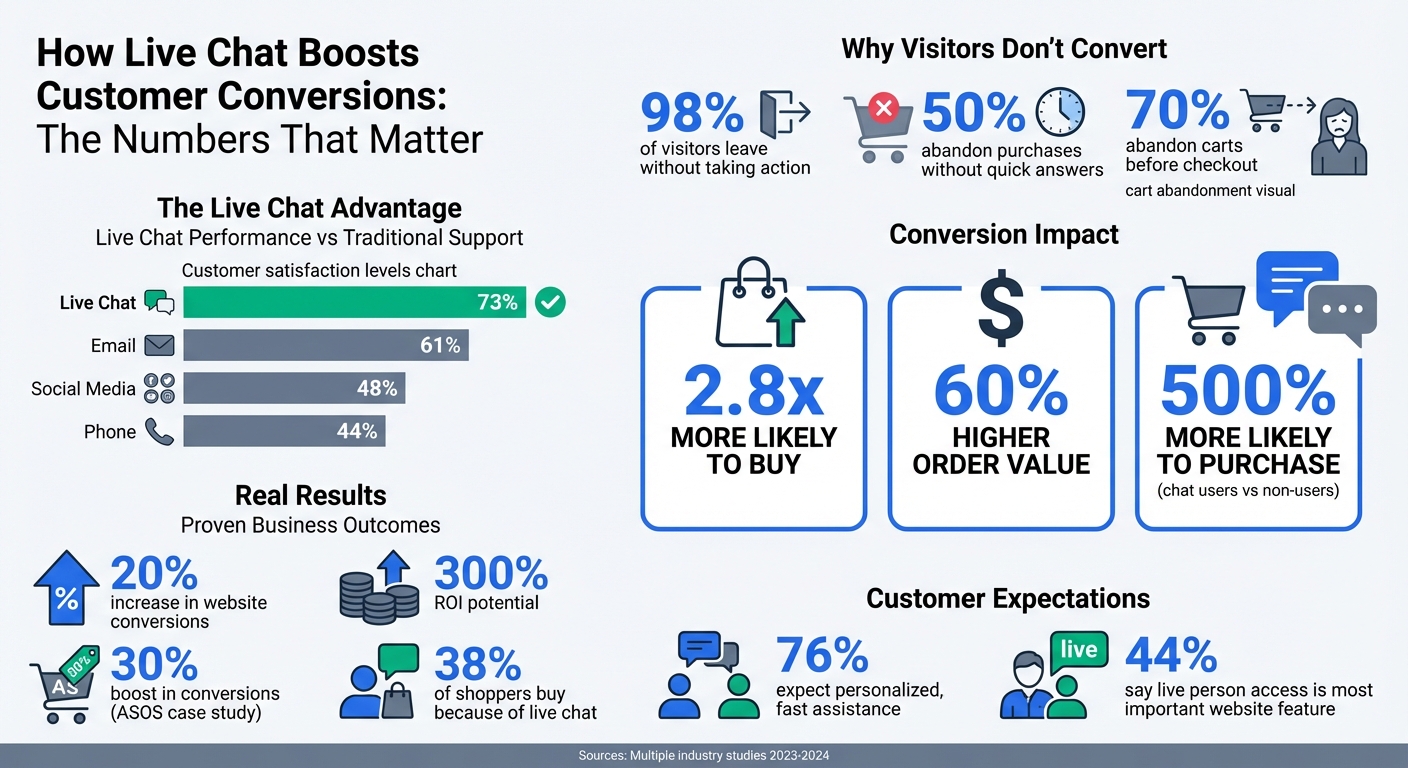
Live Chat Impact on Customer Conversions: Key Statistics and Benefits
Why Small Businesses Struggle with Conversions
The Impact of Poor Engagement
Many small business websites fail to offer immediate human assistance, and that’s a big problem. When visitors arrive with questions – like details about a product, shipping options, or return policies – they’re often left to figure things out on their own. This creates unnecessary friction, right at the moment they’re deciding whether to make a purchase.
Here’s a telling statistic: 50% of adults abandon online purchases if they can’t quickly get their questions answered. That’s half of your potential customers walking away simply because no one is there to help. On top of that, 44% of online shoppers say having access to a live person during the buying process is one of the most important website features.
When engagement is lacking, visitors tend to bounce between pages, frustrated by unclear policies or unexpected costs. These gaps in interaction highlight why traditional support methods often fail to meet customer expectations.
Limitations of Email and Phone Support
Adding to engagement challenges, traditional support options like email and phone calls often fall short in today’s fast-paced environment. Email responses typically take around 12 hours, and phone support often means waiting on hold – time that many customers simply don’t have. Delayed responses often translate directly into lost sales.
Younger shoppers, in particular, are even less tolerant of these delays. In fact, 71% of people aged 16 to 24 believe faster response times would improve their shopping experience. They’re not interested in waiting for business hours – they want answers immediately.
The numbers tell the story: live chat boasts a 73% customer satisfaction rating, compared to just 61% for email, 48% for social media, and 44% for phone support. These stats highlight the need for a more responsive and real-time solution to help small businesses close the conversion gap.
sbb-itb-5b82b38
How Live Chat Removes Conversion Obstacles
Instant Help for Uncertain Customers
Live chat provides quick answers, tackling product or shipping questions in under 30 seconds. When customers are unsure about details like shipping costs or return policies, they don’t have to wait hours for an email reply – they get the information they need immediately. This kind of instant support keeps them engaged on your site instead of wandering off to find answers elsewhere.
Here’s a powerful stat: Visitors who use live chat are over 500% more likely to make a purchase compared to those who don’t. A great example of this is ASOS, which saw a 25% drop in cart abandonment and a 30% boost in conversions simply by adding proactive live chat for ready-to-buy shoppers. Addressing customer questions right when they arise makes all the difference, especially when it comes to reducing cart abandonment.
Preventing Cart Abandonment
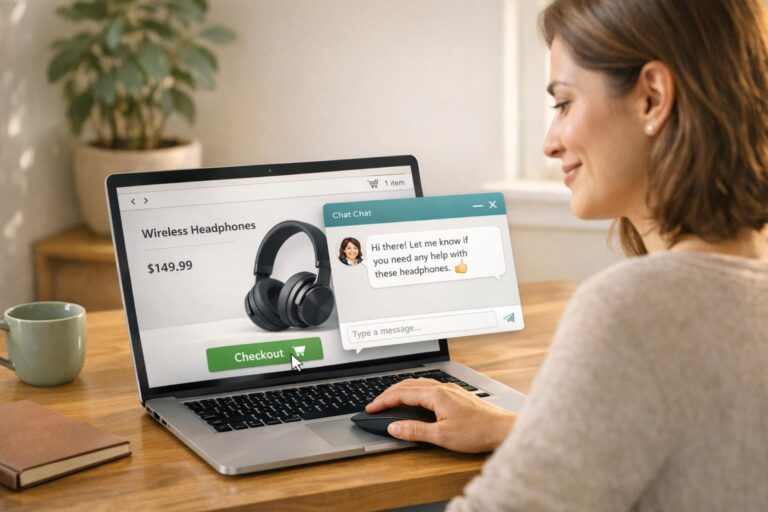
Did you know that around 70% of shoppers abandon their carts before completing a purchase? Live chat helps combat this by keeping the conversation alive during those critical final steps. A well-timed chat message at checkout can address worries about payment security, clarify unexpected fees, or even share discount codes to close the sale.
Take Auto Accessories Garage, for example. They increased their conversions by 30% just by using live chat during checkout. To make this work, keep your live chat widget visible throughout the checkout process so customers can get help without interruptions. It’s worth noting that 38% of shoppers admit they’ve made a purchase specifically because of a live chat conversation. Real-time support at checkout isn’t just convenient – it’s a game-changer for completing sales.
Building Trust Through Personalized Conversations
Live chat isn’t just about speed; it’s also about making interactions feel personal. When agents reference a customer’s browsing history or previous purchases, the chat feels custom-tailored rather than robotic. By integrating live chat with your CRM, agents can greet returning customers by name and mention past orders, creating a sense of familiarity that builds trust.
In fact, 76% of customers expect not only fast assistance but also personalized interactions. Live chat checks both boxes. customizing your chat widget with your brand’s logo and colors further reassures customers that they’re dealing with a professional business website. This mix of speed and personalization is why live chat satisfaction rates soar, with 82% of users reporting they’re happy with the experience – far higher than email or phone support.
Strategies to Increase Conversions with Live Chat
Using Behavior Triggers to Start Conversations
Tackling conversion challenges starts with engaging visitors at the right time. Behavior triggers are a smart way to initiate conversations by analyzing visitor actions – like how long they stay on a page, adding items to their cart, or even moving their cursor toward the close button. These triggers then send a message designed to engage and assist.
For example, you can set triggers to activate after 45–60 seconds on high-value pages such as pricing or checkout. This is when hesitation often kicks in, and a timely message like "Need help finding the right plan for your team?" can make all the difference. Businesses using these triggers have reported conversion rate increases of up to 40%. Engaged visitors, in fact, are up to 4.5 times more likely to make a purchase.
Drake Q., Co-founder & CPO of Chatty, emphasizes, "Waiting for visitors to ask for help is silently killing your conversions".
Exit-intent triggers are another powerful tool. When a visitor’s cursor moves toward closing the tab, a message like "Wait! Before you go, here’s 10% off your order" can help recover 10–15% of potential lost sales. Scarcity triggers also work wonders – messages such as "Only 3 left in stock! Want me to secure one for you?" create a sense of urgency without coming across as overly aggressive.
With these triggers in place, your live chat tool becomes a proactive partner in turning hesitation into action.
Closing Sales with Time-Limited Offers
Time-limited offers are a surefire way to push customers toward completing their purchase. These offers work best when tailored to where the customer is in their buying journey. On product pages, answering questions about sizing or features might be enough, but during checkout or when a visitor is about to leave, a discount code can seal the deal.
Geo-targeted urgency adds a personalized touch. For instance, a message like "Free same-day delivery available today in your area" uses IP-based information to make the offer feel relevant and timely. During major shopping events, combining live chat with time-sensitive offers has been shown to boost conversion rates by up to 40%. This mix of immediate support and exclusive deals builds trust and encourages customers to act. In fact, proactive customer support strategies deliver a 105% return on investment, compared to just 15% for reactive-only approaches.
How to Add Live Chat to Your Small Business Website
Selecting a Live Chat Tool
When choosing live chat software, make sure it integrates seamlessly with your CRM, ecommerce platform, and marketing tools. A responsive mobile widget and app are also critical since more than 50% of chat interactions now occur on mobile devices. This ensures you can manage customer interactions efficiently, no matter where they happen.
Budget is another factor to consider – look for a solution that balances affordability with the features your business needs. Automation is key as well. AI-powered chatbots can handle repetitive FAQs around the clock, giving your team more time to focus on complex sales discussions or high-value customers. By 2026, experts predict 73.8% of chat interactions will be managed by AI, making this hybrid approach a smart move for small businesses.
Training Your Staff
Once you’ve picked the right tool, the next step is preparing your team to use it effectively. A well-structured training program should cover three main areas: communication skills (tone and etiquette), support processes (workflows and escalation procedures), and platform proficiency (how to use the software).
A two-week training plan often works best. In the first week, focus on building foundational skills and workflows. Teach your team techniques like the "Tone Formula" – Acknowledge → Own → Act → Confirm – and practice the "One Question" rule to keep chats focused. During the second week, shift to mastering the software and running realistic simulations, such as managing multiple chats at once. Well-trained agents can make a huge difference, with some businesses reporting a 94% increase in sales from effective live chat interactions.
"Live chat isn’t just another support channel you can wing. It’s a high-speed, high-stakes customer experience where every second counts and every word matters." – Social Intents
Encourage agents to delegate routine questions to AI while focusing on high-value conversations. Since 77.9% of chats are initiated on mobile devices, train your team to write short, scannable messages instead of long paragraphs. Keep in mind that over 60% of customers may leave a brand after a single poor support experience, so every interaction counts.
Tracking Performance and Making Improvements
To ensure your live chat is truly effective, track metrics like First Response Time (FRT) – aim for under 30–45 seconds. Research shows that 59% of customers are more likely to buy when they receive a response within one minute. Also, keep an eye on your chat-to-conversion rate, which typically ranges from 1% to 5% for most businesses.
Integrating live chat software with tools like Google Analytics and your CRM lets you monitor the entire customer journey, from the initial chat to the final purchase. It’s also helpful to analyze proactive chats (automatically triggered) versus reactive chats (initiated by visitors) to see which approach drives better results.
Regularly review chat transcripts to identify recurring questions, common objections, and strategies used by your top-performing agents. Post-chat surveys can help measure Customer Satisfaction (CSAT) scores. While the average CSAT score for live chat is 73% – higher than email (61%) or phone support (44%) – there’s always room to improve.
Using conversation tags like #pricing or #technical_issue can highlight areas of your website or product that need improvement.
"A short, effective chat can increase conversion likelihood by 250%." – Intercom
Experiment with automated greetings to find the messages that get the best responses. Even small tweaks can make a big difference – businesses that implement live chat often see a 20% boost in website conversions and a 19% increase in total revenue. By continually optimizing your approach, you can maximize the impact of live chat on your business.
Wrapping It Up
Live chat solves a major issue for small businesses: losing customers who need quick answers but can’t get them. By bridging this gap, it delivers real-time responses, smoothing out friction during key moments – like checkout – and creates the instant trust needed to turn casual browsers into paying customers. In fact, 53% of customers abandon purchases when they can’t get immediate help.
Adding live chat can have a big impact. Businesses often see a 20% increase in conversions and up to a 300% return on investment. Plus, customers who use live chat tend to spend 60% more per transaction on average.
"Live chat is the ultimate sales hack… It’s the easiest way to bump your website conversions in real-time without split testing."
– Neil Patel, Co-Founder of NP Digital
A smart mix of AI chatbots and human agents takes customer support to the next level without blowing the budget. AI handles routine questions around the clock, while human agents step in for more complex or high-value inquiries. This approach ensures you’re always ready to capture sales, even when your team is off the clock.
FAQs
Where should I place live chat on my website?
Strategically placing your live chat button can make a big difference in driving conversions. A popular spot is the bottom right corner of your website – it’s where users naturally look for support options. By keeping it prominent and easy to access, you ensure visitors can quickly get the help they need, enhancing their experience and boosting the likelihood of them becoming customers.
When should live chat hand off from a bot to a person?
When using live chat, it’s crucial to transition from a bot to a human agent at the right moment. This shift should happen when the bot encounters challenges it can’t handle, like detailed or highly specific questions, or when a situation requires a personal touch. It’s also important to step in when the bot notices signs of customer frustration, emotional responses, or repeatedly fails to understand or resolve the issue. Timing this handoff well ensures smoother support and prevents unnecessary frustration for the customer.
How do I measure if live chat is increasing conversions?
To determine if live chat is driving conversions, focus on tracking key metrics. Start by measuring chats that directly lead to completed goals, such as sales or signups. Implement chat conversion tracking to understand how these interactions influence your results and to pinpoint which agents are performing best.
Dive into chat analytics for deeper insights. These tools can reveal details about visitor behavior, average response times, and overall engagement levels. By setting clear objectives and consistently monitoring these metrics, you can effectively gauge how live chat contributes to improving your conversion rates.