
Hotel website design plays a pivotal role in attracting and retaining potential customers. Above all, an appealing and user-friendly website is paramount in captivating visitors and building your brand’s online reputation.
Similarly to other industries, success in the hospitality sector largely depends on a successful website. With effective web design for hotels, you can unlock the secrets to elevating the overall user experience, driving more bookings, and increasing revenue.
Investing in the best hotel website design not only helps in meeting your customers’ needs but also allows your brand to stand out in the market. After all, an engaging and intuitive website can significantly boost customer satisfaction and loyalty. Now is the time to take action. By implementing best practices in hotel web design, you can start your journey towards achieving your business goals and succeeding in the ever-competitive hospitality industry.
What makes a successful website?
Stepping into the realm of hotel web design, let’s first understand what constitutes a successful website in this industry.
A successful website is a harmonious blend of compelling visuals, seamless user experience, and well-crafted content that connects with its audience. When looking at hotel website examples, those that excel have a well-defined purpose, are user-friendly, and offer valuable content, all encapsulated within an aesthetically pleasing design.
There are several factors that converge to create an outstanding website for hotels. Let’s dissect these into two main categories: key features and functionalities, and user experience considerations.
Key Features and Functionalities
At first glance, one might think that a hotel website is just about aesthetics.
However, the reality is that a successful design goes beyond mere appearance. It’s an amalgamation of key features and functionalities that cater to the needs of potential guests. This includes elements like:
- Easy navigation
- High-quality images
- Simple and secure booking process
User Experience Considerations
On the flip side of the design coin, we have user experience.
Balanced against the features and functionalities, user experience is all about making the website design intuitive and enjoyable to navigate. It is crucial to ensure that your site is user-friendly, mobile-responsive, and fast-loading to keep your visitors engaged and facilitate their journey from browsing to booking.
Importance of Responsive Design
Having tackled the key features and user experience, let’s now turn our attention to the importance of responsive design for hotel websites.
Ensuring a Seamless Experience Across Devices
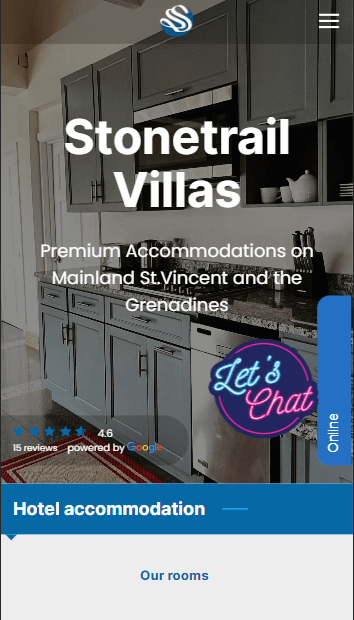
As digital landscapes evolve, so does the way users interact with websites. By the same token, it’s essential for your hotel website to be responsive. This means your website should offer a seamless experience, regardless of the device your visitors are using. At any rate, if your website doesn’t adapt to various screen sizes, you risk losing potential customers.
Emphasizing a Mobile-first Approach
Beyond being responsive, it’s also important to emphasize a mobile-first approach in today’s world. Given the increase in mobile internet usage, a mobile-first approach in hotel web design has become a necessity rather than an option. As soon as you ensure your website is mobile-friendly, you are effectively opening your doors to a wider audience, and potentially, higher bookings.
Choosing the right hotel website builder and template
Now that we’ve covered the importance of key features, user experience, and responsive design, the next step is to bring these elements together by choosing the right tools.
Evaluating builder options
When it comes to building your hotel website, the choice of platform plays a significant role. Selecting the right website builder for your hotel website design involves a careful evaluation of several options, taking into account their features, pricing, ease of use, and support services. After all, your goal is to find a builder that offers the right mix of flexibility, power, and convenience.
Selecting the best website template
In parallel to choosing a website builder, you will also need to select a suitable template for your hotel. By comparison, this decision may seem less daunting. However, choosing the right website template can significantly impact your branding and visitor engagement. Above all, you should select a template that aligns with your brand image, is visually appealing, and caters to your unique needs. After that, the journey towards creating a successful hotel website becomes much smoother.
The Process of Designing a Hotel Booking Website
Designing a hotel booking website is an art that requires technical proficiency and a deep understanding of the guest’s journey.
The process begins with planning and wireframing the website structure, which lays out the main sections and content of the site. This is a crucial step that defines the website’s skeleton and flow.
Creating a hotel booking website is an art that combines technical prowess with an understanding of the guest experience. Let’s unpack this process, explore the intricacies of SEO, and discover the importance of an integrated booking system.
The development process for a hotel website starts with a roadmap that charts the course from conception to realization.
1. Planning and wireframing the website structure
The first step in hotel website development is planning and wireframing the website structure. This involves defining the website’s main sections, deciding on the content, and designing a rough layout.
2. Selecting a suitable booking website template
With the foundation laid, the next destination on our journey is the selection of a booking website template. This isn’t a mere aesthetic decision – the chosen template should reflect your brand identity and cater to your specific needs. It serves as the structure upon which your unique brand elements will be built.
3. Customizing the template to match your hotel brand
Following the selection of the template, we embark on a quest to customize it in a way that aligns with your hotel brand. This involves fine-tuning elements like the color scheme, typography, and imagery so that they resonate with your brand’s ethos and aesthetics.
4. Ensuring Search Engine Optimization (SEO) for Hotel Websites
As we transition into the realm of SEO, it’s essential to remember that a well-designed website isn’t just visually appealing – it’s also optimized for search engines.
a. Optimizing content and metadata
At the heart of SEO lies the optimization of your website’s content and metadata. This involves the strategic incorporation of relevant keywords, crafting compelling meta descriptions, and ensuring your content is original and of high quality. With these elements in place, your website stands a better chance of ranking higher in search engine results.
b. Local SEO considerations for hotel website design
Given the local nature of the hospitality industry, local SEO stands as a pillar of hotel web design. For example, optimizing your website for local searches, establishing a Google My Business account, and encouraging online reviews all serve to enhance your visibility among potential guests searching for accommodations in your area.
5. An Integrated Booking System
We come to the critical aspect of the booking system. It’s not just a functional requirement, but the cornerstone of a guest’s online interaction with your hotel.
a. Seamless online booking experience
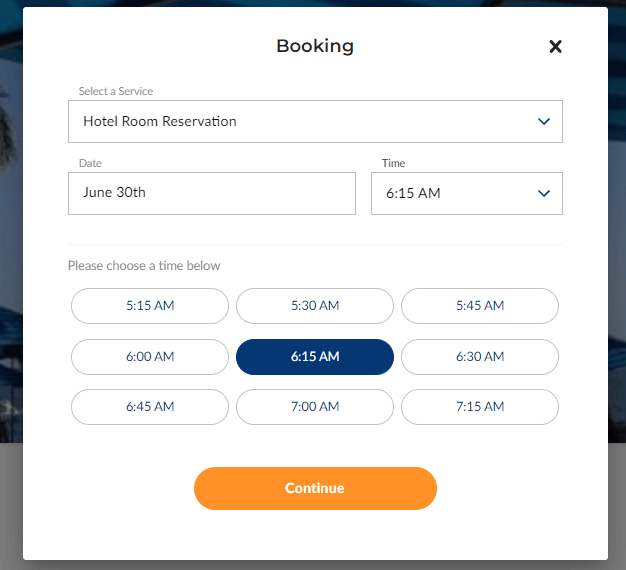
An integrated booking system is the key to a seamless online booking experience. This tool simplifies the booking process for your guests, which not only improves their experience but also bolsters the chances of them completing their reservation.
b. Syncing with hotel management systems
Finally, syncing your booking system with your hotel management system can streamline your operations and reduce the chances of overbooking. This brings the benefits of an integrated system full circle, enhancing the guest experience while also improving your back-end operations. As such, choosing a website builder that supports this integration can be an asset to your hotel’s online presence.
Overall, hotel website development involves a myriad of steps, each important in crafting a site that not only looks good but functions seamlessly and ranks well on search engines. With the right practices and tools, a hotel can create an online presence that truly stands out.
Inspiring Hotel Website Examples
We’ve explored the theory of hotel web design, now let’s take a journey through practice. We’ll delve into some inspiring examples of hotel websites that hit all the right notes, showcasing the essence of the luxury and boutique hotel sectors, as well as examining UENI’s own compelling contributions.
Luxury Hotel Website Design Showcase
We’ve explored the theory of hotel web design, now let’s take a journey through practice. We’ll delve into some inspiring examples of hotel websites that hit all the right notes, showcasing the essence of the luxury and boutique hotel sectors, as well as examining UENI’s own compelling contributions.
Boutique Hotel Website Design Examples
We’ve explored the theory of hotel web design, now let’s take a journey through practice. We’ll delve into some inspiring examples of hotel websites that hit all the right notes, showcasing the essence of the luxury and boutique hotel sectors, as well as examining UENI’s own compelling contributions.
Best Hotel Website Design Examples by UENI
1. StoneTrail Villas
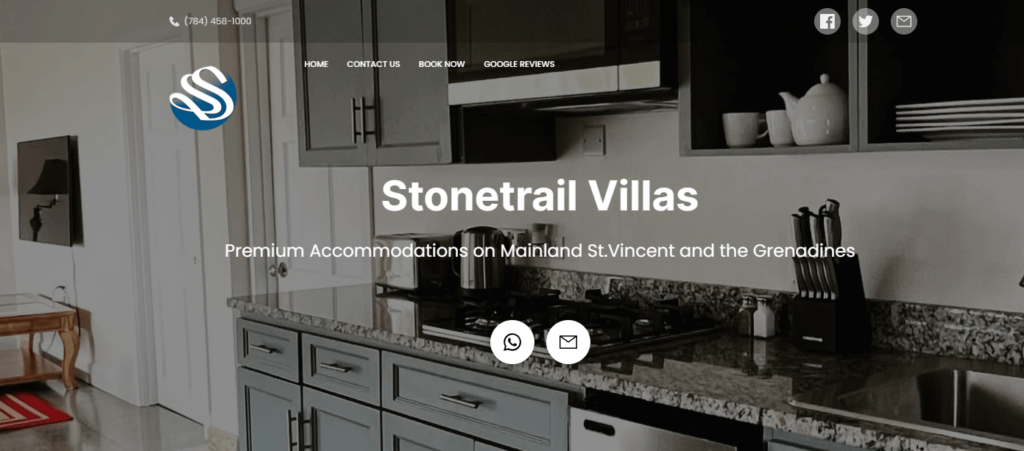
StoneTrail Villas‘ website design is an excellent example of modern and sleek design for hotels. It uses a captivating hero image to grab attention and a clean layout to make navigation easy.
Website’s top design features:
- Engaging and high-resolution hero image
- Clean and easy-to-navigate layout
- Prominent “Book Now” button to facilitate reservations
- Detailed information about amenities and features
2. Radeon Hotel
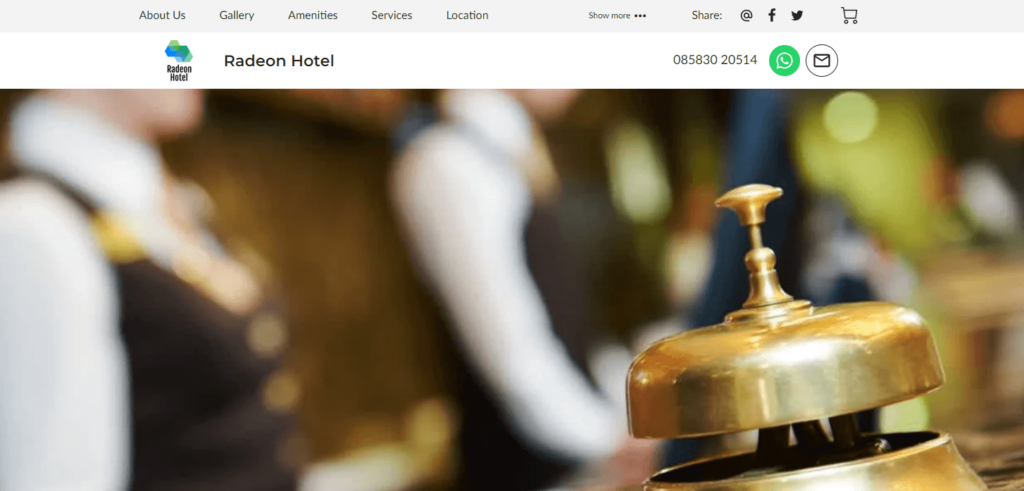
Radeon Hotel’s website showcases a vibrant and colorful design. It draws the visitor in with an attractive hero image, coupled with an easy-to-navigate layout.
Website’s top design features:
- Full-screen, vivid hero image
- Simple and straightforward navigation
- Important details about the hotel front and center
- Clear calls-to-action for bookings
3. Death Valley Hot Springs
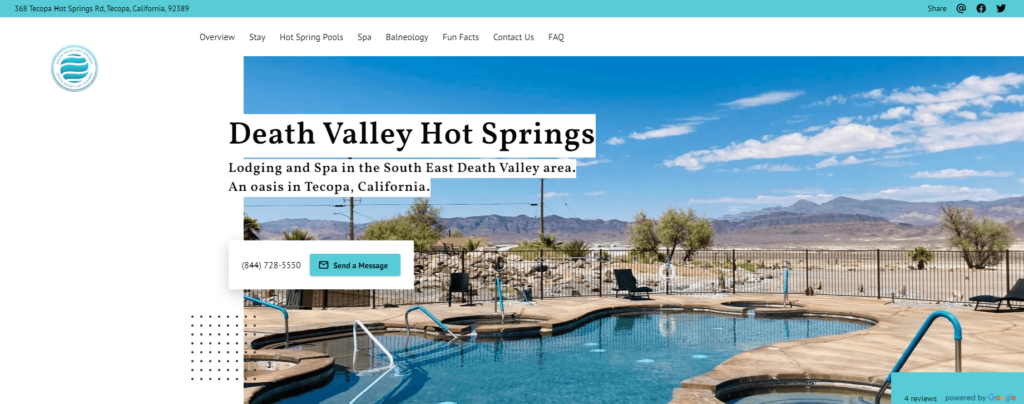
The website of Death Valley Hot Springs highlights the property’s unique location with a compelling hero image. With a clean layout, information about the property is easy to find.
Website’s top design features:
- Attractive hero image showcasing the unique location
- Clean and clear site structure
- A seamless booking process
- Detailed information about the property and amenities
4. Alesseo Resort Hotel & Spa
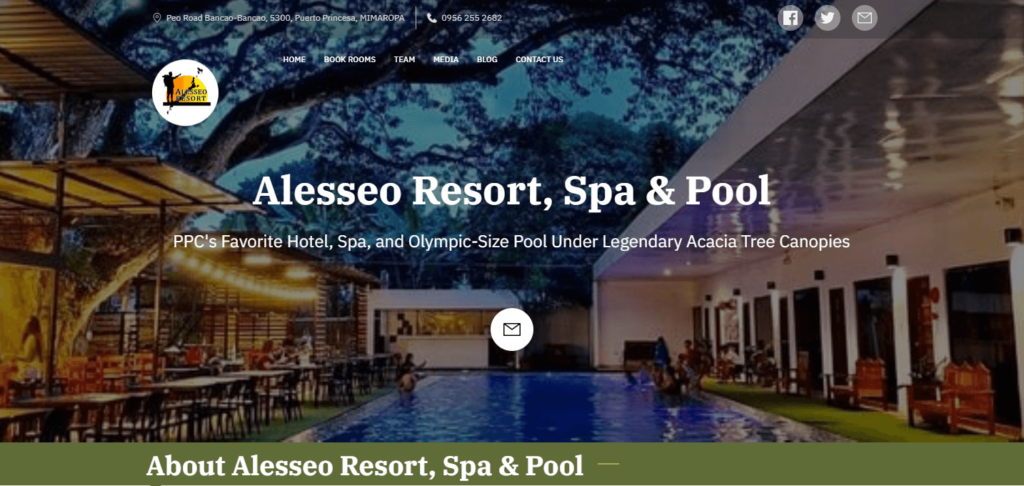
The Alesseo Resort & Spa Pool website uses high-quality imagery and a sleek design to reflect the luxury of the resort. At the same time, it maintains a user-friendly layout.
Website’s top design features:
- High-quality imagery showcasing the property
- Sleek and luxurious design elements
- User-friendly layout with easy-to-find information
- Direct booking option for a seamless user experience
5. The Royal Oak Inn
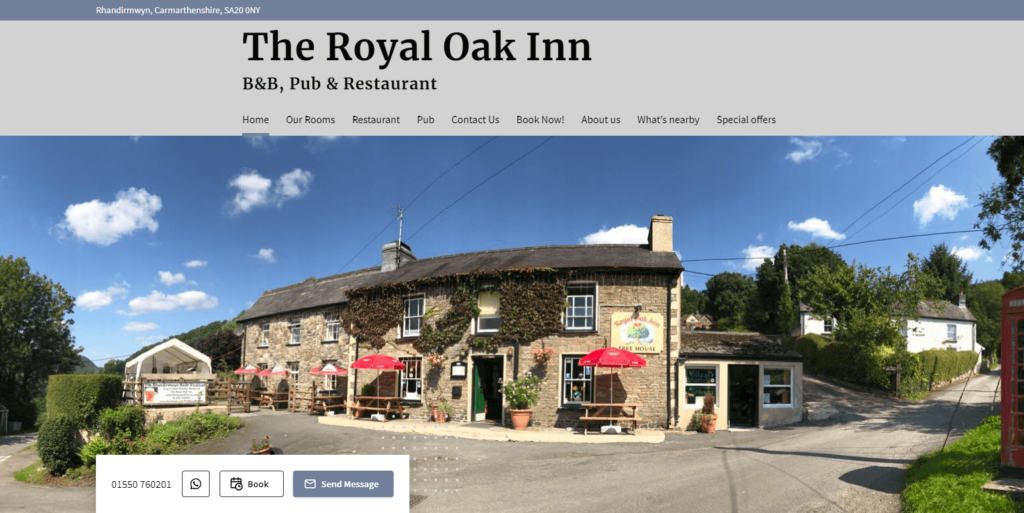
The Royal Oak Inn website uses a classic design to reflect the establishment’s traditional charm. A clear layout and easy booking process improve user experience.
Website’s top design features:
- Classic design mirroring the traditional feel of the inn
- Clear layout with easy navigation
- Direct booking options enhancing user experience
- Detailed room descriptions and amenities
6. TLC Vacations
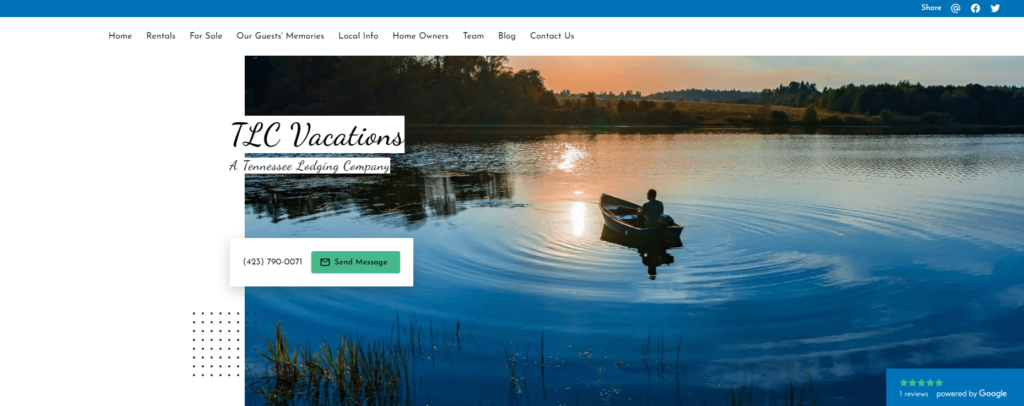
TLC Vacations webpage uses a picturesque hero image to captivate visitors. The website design is clean and intuitive, making information and booking processes easily accessible.
Website’s top design features:
- Engaging hero image depicting the scenic locale
- Clean and intuitive website design for hotels
- Quick access to booking and inquiries
- Comprehensive listing of accommodations and their features
7. Ocean City Apartment
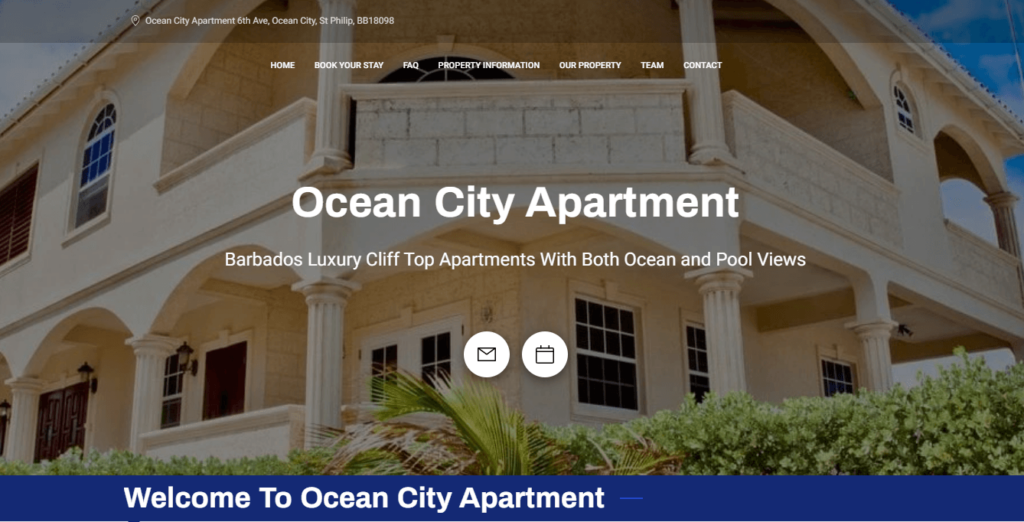
Ocean City Apartment’s website captures the relaxed vibe of the property with its cool color scheme and easy-to-navigate layout. All necessary information is efficiently presented to the visitor.
Website’s top design features:
- Cool and relaxing color scheme
- Easy-to-navigate layout
- Efficient presentation of necessary information
- Quick access to booking details
8. Accomodation4Me
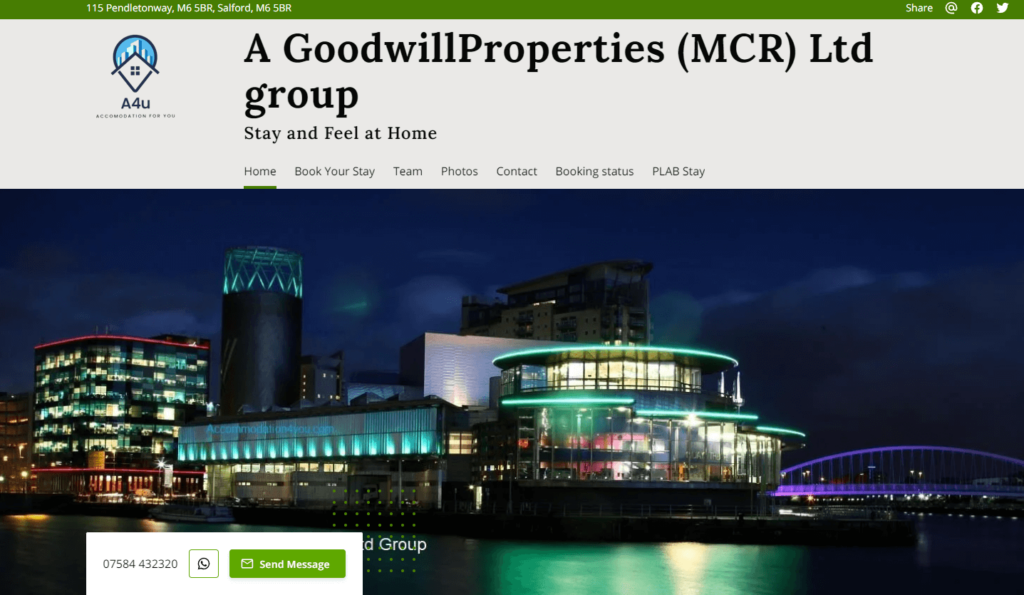
Accomodation4Me’s website leverages a minimalist design and a well-organized layout. Users can quickly view available accommodations and proceed to booking.
Website’s top design features:
- Minimalist yet attractive website design for hotels
- Well-organized layout
- Quick view of available accommodations
- Efficient booking process
9. Kenya Bay Beach Hotel
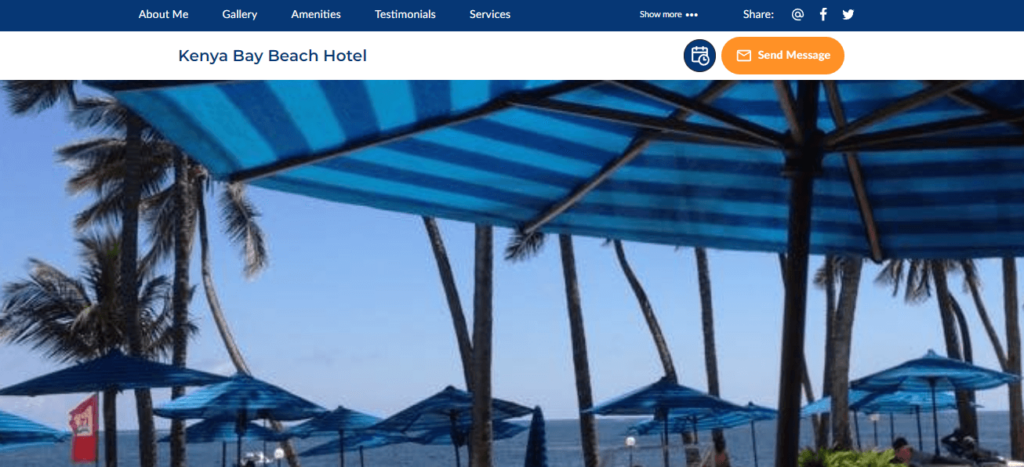
Kenya Bay Beach Hotel‘s website boasts a vibrant and dynamic design. High-quality images highlight the hotel’s features and locale, while navigation remains straightforward.
Website’s top design features:
- Vibrant and dynamic website design
- High-quality images featuring hotel and location
- Straightforward navigation
- Easily accessible booking options
10. City Palace Hotel
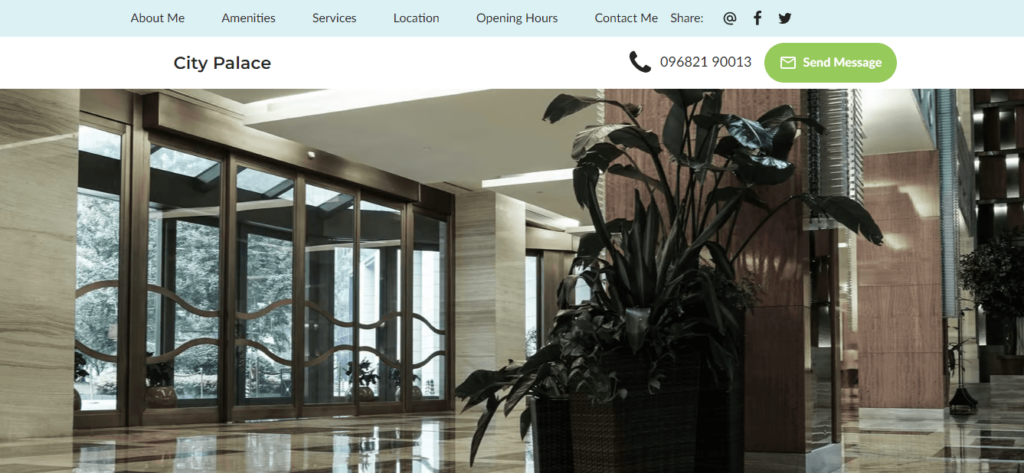
City Palace’s hotel website employs a regal design that reflects its name. The user-friendly layout ensures that visitors can easily find the information they need and book their stay.
Website’s top design features:
- Regal website design reflecting the hotel’s name
- User-friendly layout with easy navigation
- Clear and detailed information about rooms and services
- Direct booking options for a seamless user experience
Conclusion
After delving deep into the world of hotel website design, it’s clear that its significance cannot be overstated. This digital landscape serves as your first impression to potential guests, showcasing your hotel’s allure, telling its unique story, and driving bookings.
The strategies and practices explored throughout this guide will help equip you to craft a more effective hotel website. Prioritizing user experience, mobile optimization, and robust SEO strategies can collectively supercharge your website’s performance.
To sum up, armed with the insights and guidance from this guide, you are now better prepared to create a standout hotel website. One that not only reflects your brand identity but also engages your target audience and drives conversions.
Ready to embrace the digital transformation and leverage the potential of a well-crafted website? Don’t hesitate to reach out to us at UENI. We’re passionate about propelling business owners to success and would love to discuss how our website solutions can contribute to achieving your unique goals and objectives. So, unlock the potential of your digital presence today and step into the future of hotel website design.
Why hotel website design is really a channel-mix problem
For an independent property, hotel website design is not a branding exercise. It is the only lever you own on channel mix. Cloudbeds, which sells direct-booking software and therefore has a commercial interest in the number, reported in its 2026 State of Independent Hotels study that independents took 36.6% of bookings direct and 63.4% through online travel agencies. The study was released on 25 March 2026 and compiled from 90 million bookings across tens of thousands of properties in 180 countries.
Those are global figures. If you run a US property, the number that matters is on the same page and it is better: Cloudbeds lists the United States at 53.3% under a heading it calls “Where hotels retain more control”, against 79.7% in Portugal, 77.9% in Indonesia and 76.7% in Spain under “Where OTA dependence is highest”, with Canada at 49.8% and Argentina at 50.2%. The report does not label the unit on those country figures, but the ordering and its own press release both read them as OTA share. So a US independent keeps roughly ten points more of its bookings than the global average, and has that much more to defend. Every point you move from the OTA column to the direct column is margin you keep, which is the whole commercial case for the hotel website design work described earlier in this guide.
Cloudbeds also found OTA bookings cancel at 21.8% against 10.6% for direct bookings, more than double. A direct booking is worth more than its face value because it is likelier to actually arrive.
Why Booking.com will not tell you its commission rate, and what to do instead
You will find plenty of articles quoting a firm OTA commission percentage. Booking.com, the largest of them, publishes no such figure. Its own partner help page states that “The exact percentage depends on your country, property type, and the accommodation agreement you signed when you joined us”, and tells prospective partners to start the registration process to find out. A search of that page returns no percentage figure of any kind. Because the rate is negotiated property by property, there is no single headline number for anyone to quote.
So the honest way to budget hotel website design is to stop hunting for a headline rate and work from your own invoices instead. Take the commission you actually paid last quarter, divide by the direct bookings you would need to replace it, and you have the budget your site has to justify. That number is specific to your property and no benchmark can substitute for it.
Reviews decide whether anyone reaches the booking engine your hotel website design is built around
BrightLocal’s Local Consumer Review Survey 2026, a panel of 1,002 US adult consumers published on 11 February 2026, found 54% of consumers visit a business’s website after reading positive reviews, up from 32% when the question was last asked in 2019. It also found 66% do further research after a positive review while 34% are ready to buy or make a booking. For a hotel that split is the difference between a rate-shopper and a reservation, and closing it is what hotel website design is for.
The rating bar has risen fast. In the same survey 31% of consumers said they would only use a business rated 4.5 stars or higher, up from 17% a year earlier, and 68% would only use one at four stars or better. Responses matter too: 80% are likely to use a business that replies to all its reviews, 42% are unlikely to use one that never replies, and generic templated replies put off 50%. Our guides to asking customers for reviews and the best review platforms for small businesses cover the mechanics.
Guests are asking AI assistants where to stay
BrightLocal’s 2026 survey recorded use of ChatGPT and other generative AI tools for local recommendations rising from 6% to 45%, making it the third most popular source of business recommendations, while Google’s share of the same question fell from 83% to 71%. That is one panel of 1,002 people rather than a census, so read the exact numbers as directional. The behaviour change is not in doubt.
An assistant can only recommend what it can read, and most hotel website design hides exactly the details it needs. Room types, occupancy, whether parking and breakfast are included, pet policy, check-in times, cancellation terms and distance to the things guests actually search for all belong on the page as text, not inside a slider or a PDF rate sheet. BrightLocal also found 82% of consumers read AI-generated review summaries, so the site and the review profiles need to say the same thing about the property.
Hotel website design fails at the hero image before it fails anywhere else
Hotel sites lean harder on photography than almost anything else a small business publishes, which puts them at the wrong end of every speed measure. The HTTP Archive Web Almanac 2025, published on 15 January 2026 from Chrome User Experience Report data, found 48% of mobile sites pass Core Web Vitals against 56% on desktop, and that on mobile 62% achieve a good Largest Contentful Paint while 13% are poor.
The Almanac also found 76% of mobile pages have an image as their LCP element, that JPG accounts for 57% of those images against 11% for WebP, and that 62% of mobile pages fail to set dimensions on at least one image. A full-bleed suite photograph is almost always the slowest element on a hotel homepage, and it sits directly between the guest and the booking widget. Compress it, set explicit width and height, serve WebP, and load the rest of the gallery lazily.
Frequently asked questions about hotel website design
How much of an independent hotel’s business comes direct?
Cloudbeds’ 2026 State of Independent Hotels report, drawn from 90 million bookings in 180 countries and released on 25 March 2026, put independents globally at 36.6% direct and 63.4% through OTAs. For US properties the same report puts OTA dependence at 53.3%, roughly ten points better than the global figure.
What commission do OTAs actually charge?
Booking.com will not say. Its own partner help page states that the rate depends on your country, property type and the agreement you signed, and the page carries no percentage figure anywhere. Because the rate is set property by property, no single headline number exists to quote. Use your own commission invoices as the planning input instead.
Does a direct booking really beat an OTA booking?
On two counts. You keep the commission, and Cloudbeds found direct bookings cancel at 10.6% against 21.8% for OTA bookings, so a larger share of them turn into occupied rooms. Both effects favour spending on the site rather than on channel volume.
What should be visible before a guest scrolls?
Room types with real prices or a date picker, the location in text, and one obvious way to book. Rating and review count belong there too, given that 68% of consumers in BrightLocal’s 2026 survey will only use a business rated four stars or higher.
Why is my hotel website slow on phones?
The photography, almost always. The Web Almanac 2025 found 76% of mobile pages have an image as their slowest-loading element and that JPG still makes up 57% of those. Compressing the hero, setting explicit image dimensions and serving WebP fixes most of it without losing a single picture.
Sources
- Cloudbeds, 2026 State of Independent Hotels, released 25 March 2026, from 90 million bookings across 180 countries. Cloudbeds
- Booking.com for Partners, Understanding our commission. partner.booking.com, understanding our commission
- BrightLocal, Local Consumer Review Survey 2026, panel of 1,002 US adult consumers, published 11 February 2026. BrightLocal, Local Consumer Review Survey 2026
- HTTP Archive, Web Almanac 2025, Performance chapter, published 15 January 2026. HTTP Archive Web Almanac 2025
If the examples above have you planning a rebuild, our current guide to how much a website costs in 2026 replaces the older cost guide linked earlier on this page, and local SEO for small business covers getting found once the new site is live.