About This Guide
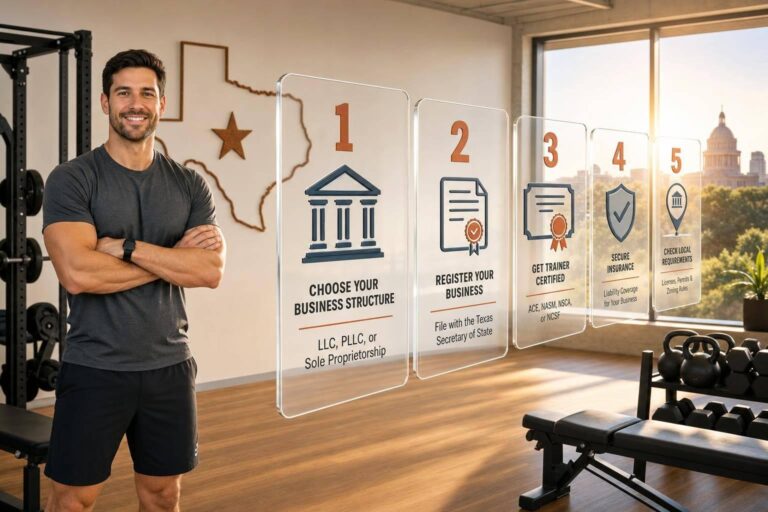
A Texas personal-training business provides individualized exercise instruction, programming, coaching, fitness assessments, and related wellness guidance in a gym, private studio, client home, outdoor location, or online. Texas does not appear to require a general state personal-trainer license for ordinary fitness coaching, but credentials such as nationally recognized personal-training and CPR/AED certifications are strong professional and client-safety practices. If the business sells memberships and provides access to exercise facilities or instruction as a health spa, Texas Health Spa Act registration and financial-protection rules may apply.
For the full step-by-step, see our gym and fitness website examples guide.
sbb-itb-5b82b38
Business Formation Steps
- Validate demand, define the training model (mobile, in-home, online, gym-based, or studio), and research local zoning and lease requirements.
- Choose a structure—sole proprietorship, partnership, or LLC/corporation. Texas directs sole proprietors and partnerships using an assumed name to file with the county clerk; entities such as LLCs register through the Secretary of State.
- Select and register the business name/DBA as applicable, appoint a registered agent if forming an entity, and file the formation documents.
- Obtain an EIN from the IRS if required or useful for banking, hiring, and tax administration; open a dedicated business bank account and bookkeeping system.
- Register with the Texas Comptroller when the business is required to collect sales tax, and determine whether the specific services or products sold are taxable. A sales-tax permit has no fee, but permit holders must collect, report, remit, and keep records.
- Verify city/county requirements, zoning, occupancy, signage, and any home-business rules before operating from a location.
- Buy insurance, complete a recognized personal-training/CPR-AED credential, prepare client waivers, informed-consent and health-screening forms, establish emergency procedures, and launch.
Legal Requirements
Follow Texas entity, assumed-name, tax, contract, consumer-protection, and local zoning rules. Use written service agreements covering fees, cancellations, packages, online-training terms, limitations, and refund policies; obtain signed waivers/informed consent and protect health information. Stay within a fitness professional’s scope: do not diagnose, prescribe treatment, provide regulated medical care, or represent yourself as an athletic trainer or other licensed health professional unless separately licensed. If operating a health spa—generally a business selling memberships that provide exercise-program instruction or facility use—obtain a certificate of registration for each location, comply with contract/security/escrow rules, and provide the required certificate and sales-tax documentation. Consult Texas counsel for nutrition, rehabilitation, minors, or medical conditions.
Licensing and Permits
For ordinary personal training, Texas has no identified dedicated statewide personal-trainer license or general statewide business license in the cited state startup materials; verify current requirements with the city/county where services are delivered. Obtain any local certificate of occupancy, zoning approval, home-occupation approval, signage permit, or general local registration that applies. Register for a Texas sales and use tax permit if selling taxable services or products; the Comptroller says there is no permit fee. If selling health-spa memberships or operating a qualifying health spa, obtain the Texas Secretary of State health-spa operator certificate of registration and meet its security, contract, posting, and escrow requirements. CPR/AED and a reputable personal-training certification are typically industry credentials rather than Texas occupational licenses.
Insurance Requirements
Texas generally does not require most private employers to carry workers’ compensation, but a non-subscriber has notice and other legal obligations, and clients, landlords, or contractors may require coverage. Obtain general liability insurance for bodily-injury/property-damage claims and professional liability (errors and omissions) insurance for alleged negligent programming, instruction, or advice. Consider a business owner’s policy, equipment/property coverage, cyber coverage for online coaching, and commercial auto coverage if transporting equipment or operating a business vehicle. Confirm limits and additional-insured requirements with the gym, landlord, or venue.
Startup Costs
A lean mobile or independent personal-training launch is estimated at approximately $1,950–$6,500 based on certification, CPR/AED training, equipment, Texas LLC formation, liability insurance, website/booking software, and initial marketing. Broader Texas startup estimates range from $4,600 to $92,000, with a median of about $23,000, depending heavily on whether the business leases or builds out a studio, hires staff, or operates from a gym/mobile model.
Typical Initial Investments
Certification (NASM, ACE, or ISSA): $500–$1,500; CPR/AED certification: $50–$100; mobile training equipment such as bands, dumbbells, mats, and TRX: $500–$2,000; Texas LLC filing: $300; liability insurance: approximately $200–$500 in the startup estimate, with broader annual Texas coverage estimates of about $500–$1,200; website and booking/payment system: $200–$800; initial marketing and social media: $200–$1,000; gym rental or partnership: $0–$500 per month. Additional costs may include attorney-reviewed waivers, local permits, transportation, commercial rent, and studio build-out.
Estimated Setup Time
Typical Time to Launch: About 2–6 weeks for a solo, mobile or gym-based launch after choosing a structure, completing registration, obtaining insurance, setting up tax administration, and securing clients. Allow roughly 1–3 months for a dedicated studio because leasing, zoning/occupancy approvals, equipment, build-out, and possible health-spa registration can add time. Initial investment is commonly much lower for mobile/online training than for a leased facility; budget separately for formation, certification/CPR, insurance, equipment, software, marketing, and deposits/build-out.
State Regulations and Compliance
Texas does not require a statewide professional license specifically for personal trainers, although nationally recognized certification and current CPR/AED training are commonly expected by gyms, insurers, and clients. Form an LLC through the Texas Secretary of State if using that structure; the listed Certificate of Formation filing fee is $300. Texas has no general statewide business license, but local requirements may apply through the city or county. Obtain a Texas sales-and-use-tax permit if selling taxable goods or taxable services; the Comptroller says the permit is free, requires collection and remittance of tax, timely returns even for zero-activity periods, recordkeeping, and permit display. One-on-one personal-training services are generally not taxable, while supplements, equipment, merchandise, and certain studio or membership-related sales may be taxable. Maintain appropriate professional/general liability insurance, client waivers, and any facility or park permits required by the local jurisdiction. Texas generally does not mandate workers’ compensation coverage for private employers, though employers should evaluate insurance and contractual requirements.
Marketing and Growth Tips
Differentiate by population, location, schedule, or measurable outcome; begin with low-overhead mobile, online, or rented-gym training before taking on studio overhead. Use local search optimization, testimonials and compliant before/after content, educational social media, email/SMS follow-up, and a simple booking/payment page. Package services into assessments, one-on-one sessions, small groups, and recurring plans; track retention, referrals, utilization, and acquisition cost. Build partnerships with complementary health, housing, employer, and sports organizations across the target Texas metro. Review taxability with the Comptroller before bundling merchandise, supplements, memberships, or other products, and keep timely records and returns.
Client Acquisition Strategies
Start with a narrowly defined offer—such as a 6-week beginner program, strength training for professionals, senior fitness, or sport conditioning—and sell an introductory assessment or trial session. Build referral relationships with gyms, physical therapists, chiropractors, wellness practitioners, apartment communities, employers, and sports clubs. Create a complete Google Business Profile for the service area, publish educational short-form videos and local SEO pages, request reviews from satisfied clients, and use referral credits or small-group packages. Offer free or low-cost educational sessions at community centers and partner locations, then convert attendees with clear packages and recurring memberships. Avoid promising medical treatment; refer rehabilitation and disease-management needs to appropriately licensed clinicians.
Helpful Local Resources
- Texas Governor’s Office—Start a Business in Texas
- Texas Secretary of State—business/entity registration and Health Spa FAQs
- Texas Comptroller of Public Accounts—sales and use tax registration and taxpayer assistance
- Texas Department of Insurance, Division of Workers’ Compensation—workers’ compensation guidance
- City and county clerk, planning/zoning, permitting, and fire/occupancy offices where the business operates
- Local Small Business Development Center (Texas SBDC) for no-cost or low-cost advising
- Professional certification organizations offering personal-training and CPR/AED credentials